
How to Ship with Dry Ice via UPS
Dry ice (solid carbon dioxide) is a hazardous material for shipping. UPS accepts it with proper packaging, labeling, and documentation. Here is what you need to know.
What Is Dry Ice and Why Is It Regulated?
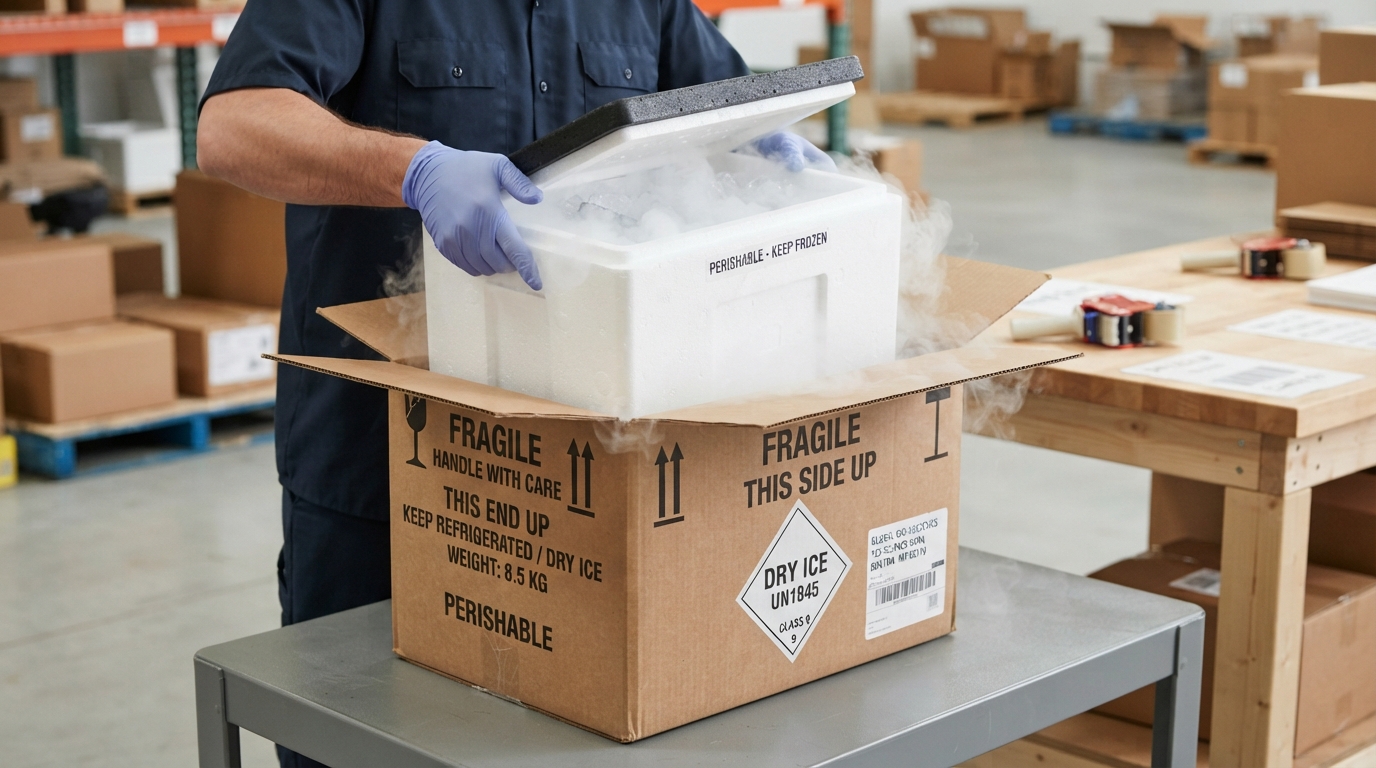
Dry ice is solid carbon dioxide at -109.3°F (-78.5°C). It sublimates (turns directly from solid to gas), which creates pressure inside containers. This makes it a Class 9 hazardous material for shipping purposes. If packaged incorrectly, the pressure can cause containers to rupture or explode.
UPS Rules for Dry Ice
- Accepted via UPS Ground and UPS Air services with proper documentation
- Must be packed in an EPS (expanded polystyrene) foam container inside a sturdy corrugated cardboard box
- Do not seal airtight — the box must allow gas to vent (go light on the tape)
- Must be labeled with the appropriate Class 9 hazardous material label
- For air shipments: must comply with IATA Packing Instructions 954
- International dry ice shipments require a signed International Special Commodities (ISC) contract with UPS
- Estimated sublimation: 5–10 lbs per 24 hours (depends on foam density and temperature)
Packaging Best Practices
- Keep contents separate from the dry ice — use dividers or wrapping
- Use an EPS foam container for insulation
- Place the foam container inside a corrugated cardboard box
- Add enough dry ice for transit time plus 24 hours as a safety margin
- Do not use glass containers (can crack from cold)
- Mark and label per hazmat regulations
Handling Safety
Dry ice can cause severe frostbite on contact with skin. Handlers should:
- Wear insulated gloves (never bare hands)
- Wear safety goggles to protect eyes
- Work in a well-ventilated area — CO2 gas can displace oxygen in enclosed spaces
- Never store dry ice in an airtight container
What About FedEx and USPS?
FedEx: Accepts dry ice with proper hazmat documentation. Requires a FedEx dangerous goods account for regular shipments. Limited quantities may be accepted from individuals with proper packaging and labeling.
USPS: Dry ice is prohibited in USPS mail except under specific conditions for diagnostic medical specimens with prior approval.
We are not attorneys and cannot provide legal advice. This information is for educational purposes and reflects carrier policies as we understand them. Laws vary by state and change frequently. Always consult the carrier directly and review applicable federal and state regulations before shipping regulated items.
Reference: UPS official dry ice shipping policy →
Frequently Asked Questions
Get quick answers to the most common questions about packaging, carriers, pricing, and what to expect.
Can I ship frozen food with dry ice through UPS?
How much dry ice do I need?
Can I ship dry ice internationally?
Do I need a hazmat certification to ship dry ice?
Shipping with dry ice? We can help with packaging supplies and advice — stop in and ask.
Get Directions →