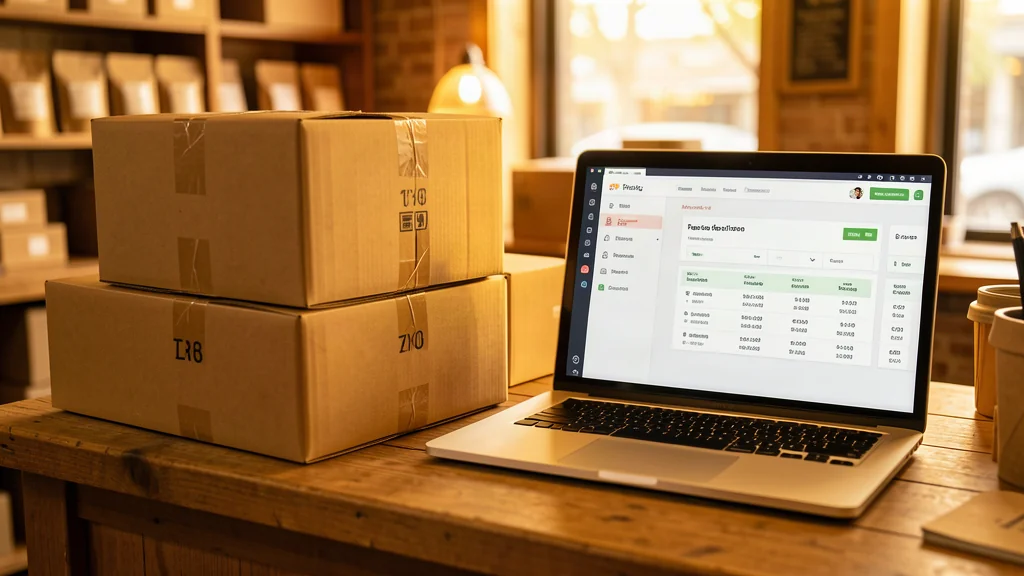
The Scene That Starts Everything
It is the second week of August, and you are doing the math on your fourth-quarter plan. Your Etsy shop has been growing all year. Sales are up, reviews are clean, and you finally convinced yourself this online selling thing is a real business, not a side hustle you keep apologizing for.
Then you open the email from Seller Central. Or you see the headline on a seller forum. And there it is, in plain numbers: the holiday fulfillment fees are coming back.
Amazon announced that its peak-season fulfillment fees will start October 15 and run through January 14, 2027. The average increase over the non-peak rate works out to about $0.32 per unit — a mobile phone case jumps from $2.49 to $2.68, a t-shirt from $6.14 to $6.53, a baby cot from $10.21 to $11.25, a television from $48.57 to $51.38. And here is the part that should make you sit up straight: the 3.5% fuel and logistics surcharge Amazon began levying in April applies on top of all of it. When a seller asked when that surcharge would end, an Amazon representative said it will stay in effect until further notice.
You are not surprised. You have seen this movie before. But you still feel the squeeze, because you are the one whose margins pay for it.
The Fee Stack
The problem here is not Amazon the marketplace. Amazon is a tool — probably the best tool there is for getting your products in front of buyers. The problem is the fee stack that quietly grows on top of every order you fulfill through the program.
Here is how it works in legal daylight. Amazon publishes a fee schedule. During the holiday rush, it applies a second, higher fee schedule on top of the first. And on top of that sits a percentage surcharge described as temporary but with no expiration date. Each layer is announced publicly. Each layer is disclosed in Seller Central. Nothing is hidden. And yet the total you pay keeps climbing — because the layers compound.
The timing is the thing. Amazon wants your inventory in its warehouses by October so it can promise Prime delivery speeds for Black Friday and Cyber Monday. It told sellers exactly that in its announcement: get the products into the network early, or risk slower delivery promises and lower capacity limits when the rush hits. That is good advice for sellers who need Amazon's fulfillment. But it is also a deadline — a date by which you must commit more money, more inventory, and more trust to a system that is telling you, in the same breath, that its costs are going up.
What It Actually Feels Like
It feels like watching your profit per order shrink one line item at a time.
You remember when you priced that t-shirt at $24.99. You ran the numbers: materials, labor, the fee you knew about, a little padding for the ones you did not. It felt solid. Then the fuel surcharge appeared in April, a percentage cut off the top of every fulfillment fee. Now the peak fee adds another $0.39 on that same t-shirt — and the surcharge gets applied to the peak fee too, not just the base. So the cushion you built into your price is thinner than it was in January, and you did not change a single thing about your product.
You feel it when you compare your bank deposit to your sales total and the gap is wider than it used to be. You feel it when you search your seller dashboard at midnight, trying to find where the money went. And you feel it most of all when you read the other headline from the same week: Amazon recouped $600 million in refunds from tariffs the Supreme Court struck down in February — and it plans to use that money to lower prices for shoppers. Not for sellers. For shoppers.
Amazon is getting money back and cutting consumer prices while simultaneously raising your fulfillment fees. The marketplace is winning on both sides of the transaction. You are the only one standing still.
Why It Should Not Be This Way
A fee structure should be predictable. You should be able to price a product in January and still be pricing the same product in October without discovering you are roughly $0.32 lighter per unit. You should not need to monitor Seller Central announcements the way you monitor the weather — hoping nothing severe moves in.
This is not about whether Amazon is being unfair. It is a giant company optimizing for its own shareholders, and within the rules of that game, the fee stack is working exactly as designed. The problem is structural. When one company controls your storage, your picking, your packing, your shipping, your delivery promise, and the fee schedule on top of all of it, you do not have a supply chain. You have a lease. And leases get repriced.
The philosophical problem is choice. A two-person online business in Lake County should not have to accept that its entire fulfillment future is priced by a single algorithm in Seattle. You should be able to look at your numbers, look at your options, and decide — rather than just absorbing whatever lands in your fee schedule next.
What We See Every Day
We are Mailbox Plus, at 7554 Fredle Drive in Concord Township, and we watch this happen to real sellers every quarter.
They walk in with boxes of product and a stack of questions. Some are just starting out, shipping ten orders a week from their kitchen table. Some are established sellers who moved hundreds of orders a month and are now doing the same math you are doing — wondering where the margin went. They all have the same look: determined, tired, and quietly furious about the fees.
We are not Amazon. We are not a fulfillment network. We are an independent, locally owned pack-and-ship counter with real people behind it, and we are honest about what we do: we help you get your packages to FedEx, UPS, USPS, and DHL — whichever one makes sense for that specific box — packed properly, labeled correctly, and dropped off fast. We will also hold your incoming packages so your home address stays off the street, and we sell the boxes, tape, and padding you need at prices that do not require a spreadsheet to understand.
We do not charge you a percentage of your revenue. We do not change our prices four times a year. When you walk out of here, you know exactly what you paid and exactly why.
How It Works
The alternative to the fee stack is simpler than the marketing departments want you to believe. It is three steps.
One. Pack it your way. Buy your boxes, tape, and bubble wrap at the counter — or bring your own. If you want it done for you, our packing service starts at $10 for basic packing and $20 for fragile. You keep control of the box and what goes in it.
Two. Pick the carrier that fits the order. Not every package needs the same network. Sometimes FedEx ground is the right price. Sometimes UPS is faster for the zone. Sometimes USPS Priority is the cheapest way to get a small, light item across the country. We work with all of them, so the carrier works for your order — not the other way around.
Three. Drop it and go. Hand us the package, we make sure the label is right and the box will survive the trip, and you are out the door. No peak-season fee schedule. No percentage surcharge with no expiration date. No mystery line items in a monthly bill you cannot fully decode.
What You Lose by Not Acting
If you do nothing, here is what the next four months look like.
Time. You will spend October deciding how much inventory to commit to a system you are increasingly unsure about, then spend November and December watching orders and fee schedules at the same time. That is time you are not spending on product, photos, or the parts of the business you actually enjoy.
Money. On every fulfillment order between October 15 and January 14, you pay the peak fee plus the 3.5% surcharge. If you ship a thousand orders in that window, the average $0.32-per-unit increase alone is $320 — before the surcharge compounds on it. That is money that does not go to you, and it does not go to your customer either. It goes to the stack.
Control. Every dollar of fulfillment cost you hand to one company is a dollar of leverage you give up over your own margins. When the next surcharge arrives — and it will — you will have no alternative to compare it against. You will just pay it, because you never built the option to do anything else.
Your Afternoon After the Change
Picture the version of your business where fulfillment is not a monthly anxiety.
It is a Tuesday in October, and you have a stack of orders on your kitchen table — not your whole Q4, just the orders that make sense to ship yourself. You drive down Crile Road and turn onto Fredle Drive. You park. You walk into Mailbox Plus with your boxes, your labels already printed, and your route planned: a couple of FedEx ground, one UPS, one USPS small flat-rate.
Ten minutes later you are done. The packages are weighed, checked, and gone. You know the exact cost of every single one — whatever the counter says, right there, before the tape goes on — because you paid it at the counter instead of discovering it in a statement next month. No peak fee. No percentage surcharge. No algorithm deciding your margin.
You get back in the car and realize your shoulders are not up around your ears. That is the part people do not expect: the quiet feeling of knowing exactly what your shipping costs, and exactly why.
Bring It In
The holiday fees are not a surprise anymore. They are a schedule: October 15 to January 14, with a 3.5% surcharge on top and no end date in sight.
You do not have to make your entire fulfillment decision today. But you should make one decision today: before you commit more inventory to the fee stack, come see what shipping looks like when the counter sets the price — not the algorithm.
Stop by Mailbox Plus at 7554 Fredle Drive in Concord Township. Bring a box, a label, or just your seller dashboard and your questions. We will show you your options, honestly, and you can decide for yourself.