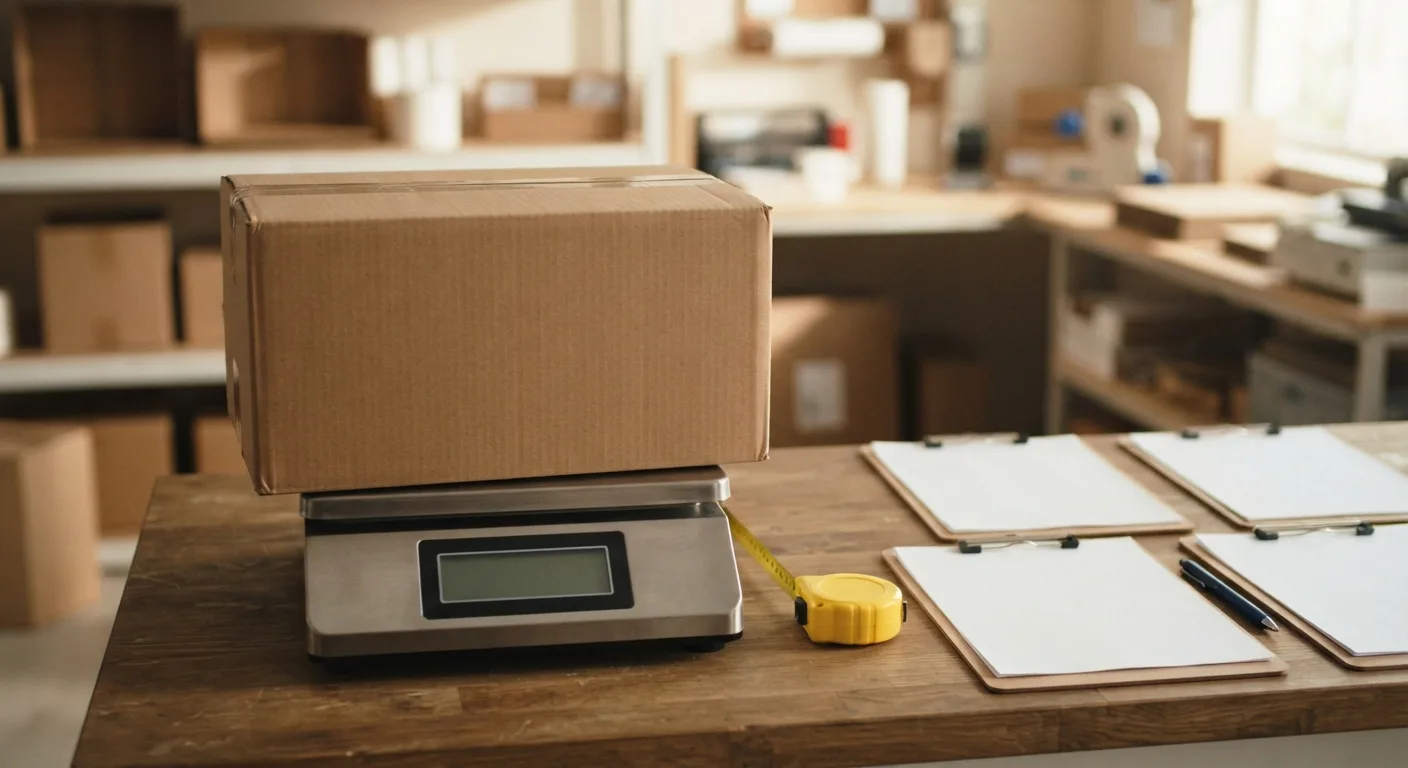
The Part Nobody Warns You About
You have a heavy box to ship, and the price you were quoted does not match the price you were expecting. Maybe it was the online estimate that looked fine until you entered the dimensions. Maybe it was the counter where a 30-pound box somehow cost more than the 70-pound box you shipped last month. Either way, you are standing there wondering how the weight you know went into the box turned into a number that big.
It should be simple: heavier box, higher price, done. And for most ground shipments, once you know which carrier owns which weight range — and which traps stack fees on top of the base rate — it can be. Here's how the three ground options actually price a heavy box, and where the extra money hides.
The Machine Behind The Blanket Rate Card
The thing working against you is not one carrier being greedy. It is the way all three carriers price ground service: by published rate tables that charge by weight tier and distance zone, then pile adjustments on top. The structure is public and legal — you just never see it unless you go looking.
Start with weight tiers. Every carrier breaks ground pricing into pound bands, and the price does not rise smoothly between them. A 32-pound box can sit in the same tier as a 35-pound box, or jump to the next one — and two pounds of extra packing material can bump you across a line that costs real money. USPS Ground Advantage tops out at 70 pounds; past that, you are out of options there. UPS Ground and FedEx Ground both accept up to 150 pounds, 108 inches in length, or 165 inches in length plus girth.
Then comes dimensional weight. If your box is large and light — a lamp base, a bundle of pool noodles, foam-packed anything — the carriers bill it by the space it occupies, not the number on the scale. You pay for air. A box that weighs 12 pounds can be billed as 30 if it measures big enough.
And on top of the base rate sit the surcharges. Fuel surcharges on domestic ground ran around 29.75% at both UPS and FedEx in the fall of 2026 — set weekly, applied to nearly every package. Cross 50 pounds or certain size thresholds and additional-handling fees start — we unpack the full surcharge stack in what happens when your box is heavy or oversized. During the holiday peak, UPS raised its additional-handling fee to $11.90 per package and the large-package fee to $117.50 between November 22 and December 26. None of that shows up in the weight you're thinking about.
The Feeling Every Regular Recognizes
You packed the box carefully. You knew the weight — you were the one who lugged it to the car. Then the total comes back, and it's higher than the online quote. Your hand stops on your wallet. Nobody up front explains why; the rules that produced the number were never shown to you.
You start second-guessing yourself. Should you have used a smaller box? Should you have split it into two shipments? Should you drive somewhere else? Most people just pay it, because the alternative — auditing three carriers' rate tables on your phone in a parking lot — is not a real option when you have somewhere to be.
What the Counter Knows and Can't Say
USPS Ground Advantage is the budget workhorse from roughly 1 to 70 pounds. Retail prices start at $7.90, typical delivery runs 2 to 5 days, and the weight cap is 70 pounds. For mid-weight boxes going moderate distances, it is frequently the lowest sticker price. Its weakness: at 70 pounds you hit a hard ceiling, and pricing climbs quickly in the upper weight tiers — a heavy box near the cap can cost more than the same box at UPS or FedEx, which price their upper tiers for heavier freight.
UPS Ground and FedEx Ground run nearly identical rulebooks: 150 pounds, 108-inch length, 165-inch length-plus-girth. Their per-pound pricing is built for heavier boxes, so as your shipment climbs from 40 toward 70-plus pounds, they often pull ahead of USPS on price. Their weakness is the surcharge stack — that ~30% fuel charge, additional handling past 50 pounds, and residential delivery fees.
There is no permanent winner. Which carrier prices lowest depends on the weight, the box dimensions, and the destination zone — sometimes all three at once. (We break down the same four-carrier rate spread for ordinary packages in how to compare shipping rates between UPS, FedEx, USPS, and DHL.) Anyone who tells you one carrier always wins on heavy boxes, or that a single weight cutoff flips the winner forever, is reciting a rule of thumb that breaks the moment a real box crosses a real tier line.
The Counter at 7554 Fredle Drive
At Mailbox Plus in Concord Township, all three carriers' ground services sit at one counter on Fredle Drive, just off Crile Road. That changes the math in a way no single-carrier outlet can: we can put your box on the scale, measure it, and rate it across USPS, UPS, and FedEx in front of you — the actual packed weight, the actual dimensions, the actual destination.
If your box is a few pounds over a weight-tier line, we see that and can often repack it to come in under. If dimensional weight is about to bill you for air, you'll hear it before the label prints, not after. And because we're an independent counter — not a franchise locked to one carrier network — there is no incentive to steer you to the option that pays us more. The rate comparison is the recommendation.
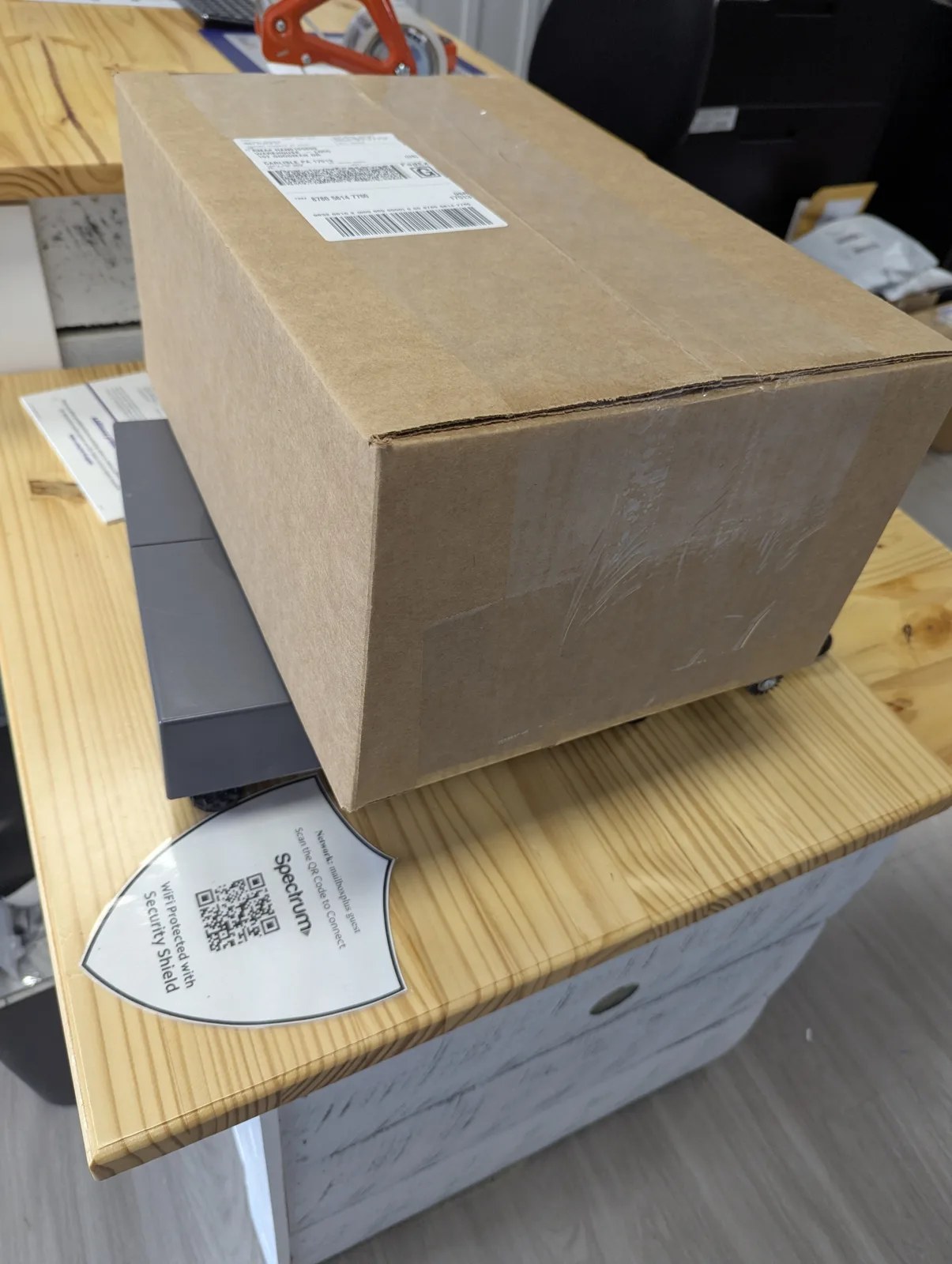
A sealed heavy cardboard box on the parcel scale at the Mailbox Plus counter in Concord Township, ready to be rated across ground carriers
From Handoff to Receipt
The process is deliberately short:
- Bring the box as it is. Packed, half-packed, or in pieces next to the item — no pre-sorting, no online forms filled out at home.
- We weigh, measure, and rate it. Scale and tape first, then a side-by-side ground rate across the carriers your box actually qualifies for. If a smaller box or different packing drops you a weight tier, we'll show you that number too.
- Pick a rate and we handle the rest. Label, carrier drop-off or pickup, and a receipt in your hand before you leave.
The Bill That Never Shows Up
Ship the same 60-pound box on the wrong carrier and you can lose tens of dollars in one shipment — the sticker you saw, plus the stack of surcharges you didn't see. And if you're an online seller shipping several heavy boxes a week, that leak compounds quietly, shipment after shipment. The 2027 rate environment makes it worse: ground rates are rising around 6.1% on average across zones, FedEx's ground minimum charge is climbing to $12.70, and USPS has an 8% time-limited increase on Ground Advantage running through January 17, 2027. The gap between the right carrier and the wrong one widens every time the rate tables move.
And there's a quieter cost: the dread tax. Once you've been burned by an unexpected heavy-box quote, every future shipment starts with a low-grade worry about what the number will be this time.
The Trip That Clears Your Head
The version where this stops being a problem looks like this: you pull in off Fredle Drive, carry the box to the counter, and set it down. It goes on the scale. Someone reads you three numbers — not an algorithm's guess, the actual rate for the actual box. You pick one. Receipt. Done.
Three rates load on the screen. You pick one. The label prints. No invoice surprise later, no second-guessing in the car — the comparison happened in front of you instead of inside a total you'd already agreed to.
Walk In and Ask
You don't need the weight memorized, the dimensions measured, or a carrier picked in advance. Bring the box — taped or not — and put it on the counter at 7554 Fredle Drive in Concord Township. Weighing it, measuring it, and rating it across ground carriers is a few minutes of work that happens while you stand there. That is literally the job: the comparison you've been putting off, done before you drive home.