You Sold the Ring. Now the Scary Part Starts.
The listing is live, the payment cleared, and the piece that has been sitting in your drawer is finally someone else's. Now you have to put it in a box and hand it to a system that loses things, and you already know the two ways this goes wrong: the package arrives broken, or it arrives fine and the buyer claims it never did — and either way, the insurance you thought you bought quietly does not apply.
You paid for shipping and coverage, expecting safety. Instead, you got a system built so the denial is legal.
The fix is knowing the three rules the platform help pages never put in one place: pack to the carriers' published standard, buy coverage that matches what the piece is actually worth, and hand the box to a person who scans it. Here is how each one works.
The Part Nobody Warns You About
The system working against you is not a thief on a porch. It is a coverage gap that is completely legal, printed deep in carrier terms, and invisible until you need the money.
Here is how it operates. When you buy shipping through an online platform or a carrier's retail label flow, you often get a default level of coverage included with the label. It sounds like insurance. What it actually is, for jewelry, is a policy with a low ceiling and a packing condition attached:
- FedEx caps declared value on jewelry at $1,000 per package. Its own jewelry guide states it plainly: jewelry shipments are "normally limited" to a $1,000 maximum declared value, and its Declared Value Advantage program (an application-only option for recurring shippers) is what lifts the ceiling. UPS's tariff caps jewelry shipments at $1,000 per package on international moves, with higher limits only to eligible destinations under special arrangements. The $2,500 gold bracelet you shipped on a standard retail label was under-covered the second the label printed — the standard checkout had no box to raise that ceiling, and the programs that do (FedEx's application-only tier, UPS's special arrangements) require setup before you ship, not a click at checkout.
- USPS handles it differently — the coverage is real but the security tier matters. USPS explicitly recommends Registered Mail for valuable items like jewelry; Registered Mail is the postal service's highest-security tier, with insured value available up to $50,000. Ordinary labels with standard insurance leave a valuable parcel moving through the network with the same handling as a paperback.
- The packing condition comes standard in every carrier's terms. All three carriers state in their liability terms that the shipper is responsible for packing contents adequately. When a claim opens, the reviewer asks for the packaging — and a bracelet in a single layer of bubble wrap inside a padded envelope fails their published standard before handling is ever questioned.
Then the platform's flow closes the trap. Marketplace labels route your sale onto whatever service the buyer selected. The default coverage tiers were never designed for jewelry, the ceiling is not shown next to the buy button, and the denial email arrives weeks later quoting terms you were never asked to read.
You are not careless for missing it. The checkout flow is designed so you never see it.
You've Done This Math Before
You are standing at your kitchen table with the shipping label taped on and the box already sealed, and a question you cannot answer stops your hand: if this disappears, who actually pays me?
You open the marketplace help center first, and it gives you a maze — seller protection, signature requirements, deadlines for reporting, each paragraph pointing at another paragraph. You search the carrier's site and find the declared-value page, then the restricted-commodities page, and the two do not quite agree. The buyer is messaging you asking when it ships. The box sits there. And underneath all of it is the specific dread of shipping something where the money and the object are the same thing: this is not a sweater you can re-list. There is exactly one of it.
Why This Quietly Stopped Making Sense
A person selling a $400 ring should not need a legal research session before taping a box. The carriers publish excellent, free guides — USPS explains Registered Mail in plain language, FedEx and UPS both publish full packaging specifications. The information is public. It is simply scattered across four websites, written in claims-adjuster language, and never assembled in the order a seller actually needs it: pack, cover, hand off.
That assembly is a two-minute job for someone who ships dozens of high-value parcels a week. It is an hour of anxiety for the seller shipping their first one. That gap — not the price of the label — is the real cost of doing it alone.
What the Clerks Behind the Counter Know
Sellers come to our counter at 7554 Fredle Drive in Concord Township carrying exactly that unfinished question — a ring in a tiny box, a printed label, and a "is this covered?" look.
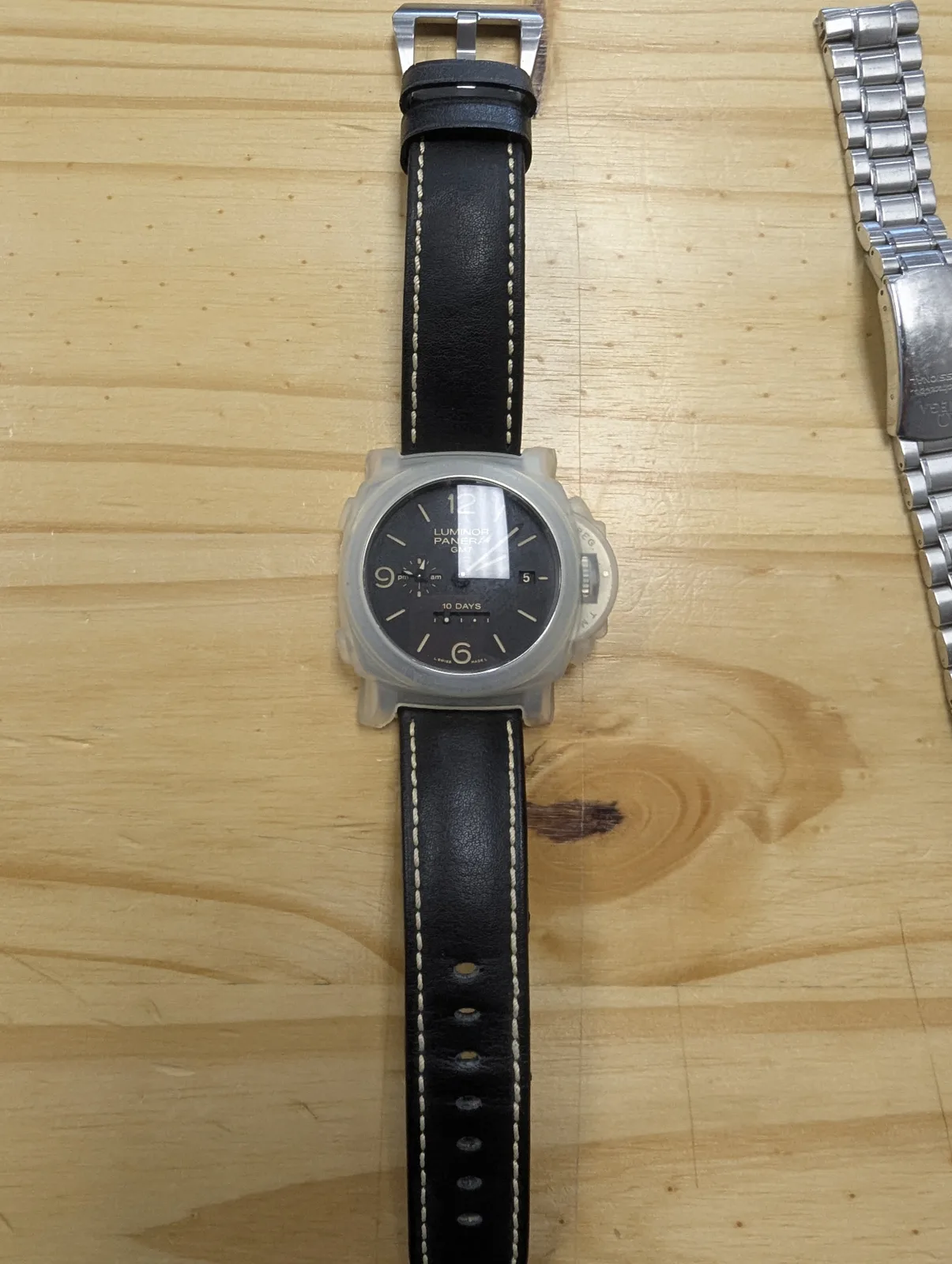
A high-value wristwatch being prepared for secure shipment on the packing counter at Mailbox Plus in Concord Township, OH.
We are an independent shipping store, not a franchise, so we are not locked into one carrier's flow: we ship USPS, UPS, and FedEx from the same counter, which means the honest answer gets to be the actual answer instead of whichever carrier we work for.
Here is what we tell every jewelry seller, and what we do for them:
- We ask what the piece sold for before we pick a service. Coverage is chosen first, service second — the reverse of how online checkout does it. Low-value piece: tracked ground service with declared value matching the sale. Higher-value piece: the security tier that actually insures it — for USPS that is Registered Mail, insured to $50,000 and the slowest-moving mail class USPS operates, because every piece is processed by hand through locked custody. Secure beats fast when the object cannot be replaced.
- We pack to the standard the claims reviewer will test against. Every piece wrapped individually, cushioning between pieces, everything inside a rigid inner box, that box centered in a sturdy outer carton with cushioning on all six sides. The carriers' own packaging guides describe this method — we just build it at the counter so you never have to guess whether yours passes.
- We hand it to a person and give you the receipt. A dated, scanned receipt is your proof of custody. No mailbox flag, no unscanned window, no "porch delivered" ambiguity for a parcel that cannot be replaced.
You do not need to learn the claims process. You need the box to survive, and the paper trail to hold up.
The Five-Minute Packing Standard
If you are packing it yourself, this is the standard, in order:
- Wrap and box-in-box. Each piece individually wrapped in padding. Small rigid inner box, pieces separated so they cannot touch. Outer carton with roughly 2 inches of cushioning on every side. Shake the sealed box — if anything shifts, add cushioning; USPS's own packing guide says exactly that. One hard line from FedEx: jewelry valued over $500 cannot go in a padded envelope — it needs a sturdy corrugated box. This is the method the carriers' published guidelines describe, and it is what a claim reviewer looks for.
- Cover it before the label prints. The ceiling is the thing to check while you can still change the answer: FedEx $1,000 per package on jewelry, UPS $1,000 on international jewelry moves, USPS Registered Mail up to $50,000. A piece worth more than the ceiling needs third-party insurance or a different tier — decided at the counter, with the sale price known, not in a dispute email six weeks later.
- Get a signature for anything that matters. Signature confirmation means "delivered" means handed to a person — not photographed on a mat. On eBay it is not even optional at the top end: orders of $750 or more require signature confirmation for the seller to be protected in an item-not-received case. It is the single cheapest defense against the not-received claim.
- Hand it to a staffed counter and keep the receipt. The scan starts the tracking record with a person present. The dated receipt is your evidence of custody.
- Photograph the packed piece before sealing. A photo of the item inside its cushioning — with the piece visible — is the evidence that ends most "it arrived damaged / it was never in the box" disputes in minutes. Take thirty seconds to take it.
For the packing physics in more depth — box-in-box, cushioning thickness, why claims get denied on packaging — see our guide on how to ship fragile glass and ceramics. And if you are also a seller who ships from home, our article on the online seller address privacy shield covers keeping your home address off every return label.
What Nobody Tells You You're Paying
The money. An under-covered or unpacked-to-standard claim is a denial letter, not a settlement — and the denial arrives after the refund, so you have paid the buyer and the carrier. Platform protection has ceilings too: Depop's seller protection, for example, covers sales only up to $300 and only when the item ships on a Depop-generated label.
The account. A not-received or item-not-as-described dispute hits your seller metrics. One bad week of metrics on a marketplace is a visibility penalty that costs you more than the ring did.
The confidence to sell the next one. This is the quiet cost. The drawer fills back up with pieces you never list because the last shipment cost you a week of sleep and $400. Every unsold piece is a listing fee you never charged yourself but paid anyway.
The Trip You'll Stop Thinking About
Next time, the ring sells on a Tuesday and it is at the counter on Wednesday. The piece gets wrapped, boxed, and covered while you answer a message from the buyer. The receipt goes in your phone case, the tracking starts with a scan from a person who held the box, and the drive home has nothing heavy in it — because the "who pays if this vanishes" question got answered before the tape, not after the claim. That is what shipping jewelry is supposed to feel like.
What to Bring With You
You do not need to have this figured out. Bring the piece in however it is right now — loose in a jewelry box, in the envelope you were unsure about, wrapped in last night's tissue paper. Ask us the coverage question out loud. That is exactly what the counter is for: we pack it to the standard, put the right coverage on it, and hand you the receipt. You keep selling. We keep the boxes surviving.
See us at 7554 Fredle Drive, Concord Township — or call ahead at the number on our shipping services page if you want the coverage conversation before you drive over.