
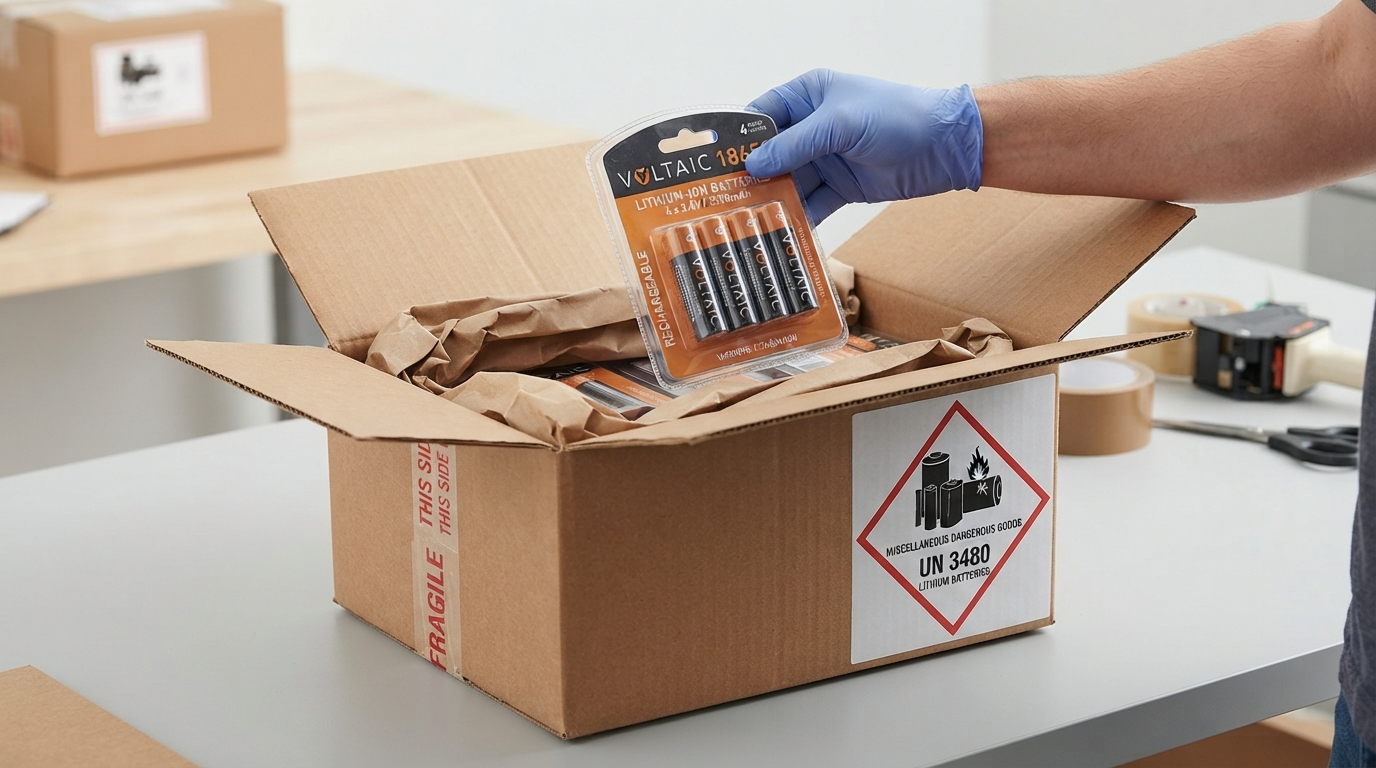




How to Ship Batteries Safely
Batteries are one of the most commonly shipped regulated items — and one of the most misunderstood. Lithium, alkaline, rechargeable, loose, installed — each has different rules. Here is what you need to know.
Why Batteries Are Regulated
Batteries contain chemicals and energy storage that can overheat, short-circuit, or catch fire during shipping. The Department of Transportation (DOT) and international air authorities (IATA) classify many batteries as dangerous goods (hazmat), which means special handling, packaging, and labeling rules apply.
Ship them wrong, and the carrier can refuse the package, the shipment can be grounded, or — in rare cases — a fire can start in transit.
Battery Types and Their Rules
| Battery Type | Regulated? | Can Individuals Ship? |
|---|---|---|
| Alkaline (AA, AAA, C, D, 9V) | No (non-hazmat) | Yes — standard shipping |
| Lithium-ion (rechargeable, installed in device) | Yes — Section II | Yes — with proper packaging |
| Lithium-ion (loose or spare) | Yes — Section IB/II | Restricted — carrier-specific rules |
| Lithium metal (non-rechargeable, installed) | Yes — Section II | Yes — with proper packaging |
| Lithium metal (loose or spare) | Yes — Section IB/II | Restricted — carrier-specific rules |
| Wet (lead-acid, car batteries) | Yes — Hazmat | Ground only — special handling |
How to Pack Batteries for Shipping
- Alkaline (AA, AAA, etc.): Tape the terminals with electrical tape or use battery packaging. Place in a sturdy box with cushioning. No hazmat surcharge.
- Lithium batteries installed in a device: The device must be switched off and protected against accidental activation. Cushion the device so it cannot shift. Label as "Lithium battery in device" if required.
- Loose lithium batteries: Each battery must be individually wrapped (plastic bag or bubble wrap). Terminals must be taped. Place in a box with non-conductive cushioning. Carriers may require hazmat labels and special handling.
- Car batteries (wet/lead-acid): Must be upright, terminals protected, and shipped via ground only. Requires hazmat declaration and special labeling.
What Each Carrier Allows
- FedEx: Accepts lithium batteries (installed in devices) from individuals. Spare/loose lithium batteries may require a FedEx approved shipper account. Wet batteries are ground-only hazmat.
- UPS: Similar rules — installed lithium batteries OK with proper packaging. Loose/high-quantity lithium requires a hazmat agreement. Wet batteries are ground-only with hazmat fee.
- USPS: Accepts lithium batteries only when installed in the equipment they power. Loose or spare lithium batteries are prohibited in USPS mail. Alkaline and standard batteries are fine.
What We Can Help With
We handle battery shipments every day at our counter. Here is what we can do for you:
- Advise on packaging for your specific battery type
- Provide proper battery packaging materials
- Process shipments with the correct labeling
- Choose the right carrier based on what you are shipping
Stop by Mailbox Plus at 7554 Fredle Drive, Concord Township — we will walk you through it.
We are not attorneys and cannot provide legal advice. This information is for educational purposes and reflects carrier policies as we understand them. Laws vary by state and change frequently. Always consult the carrier directly and review applicable federal and state regulations before shipping regulated items.
Reference: FedEx official battery shipping policy →
Frequently Asked Questions
Get quick answers to the most common questions about packaging, carriers, pricing, and what to expect.