Where Your Afternoon Actually Goes
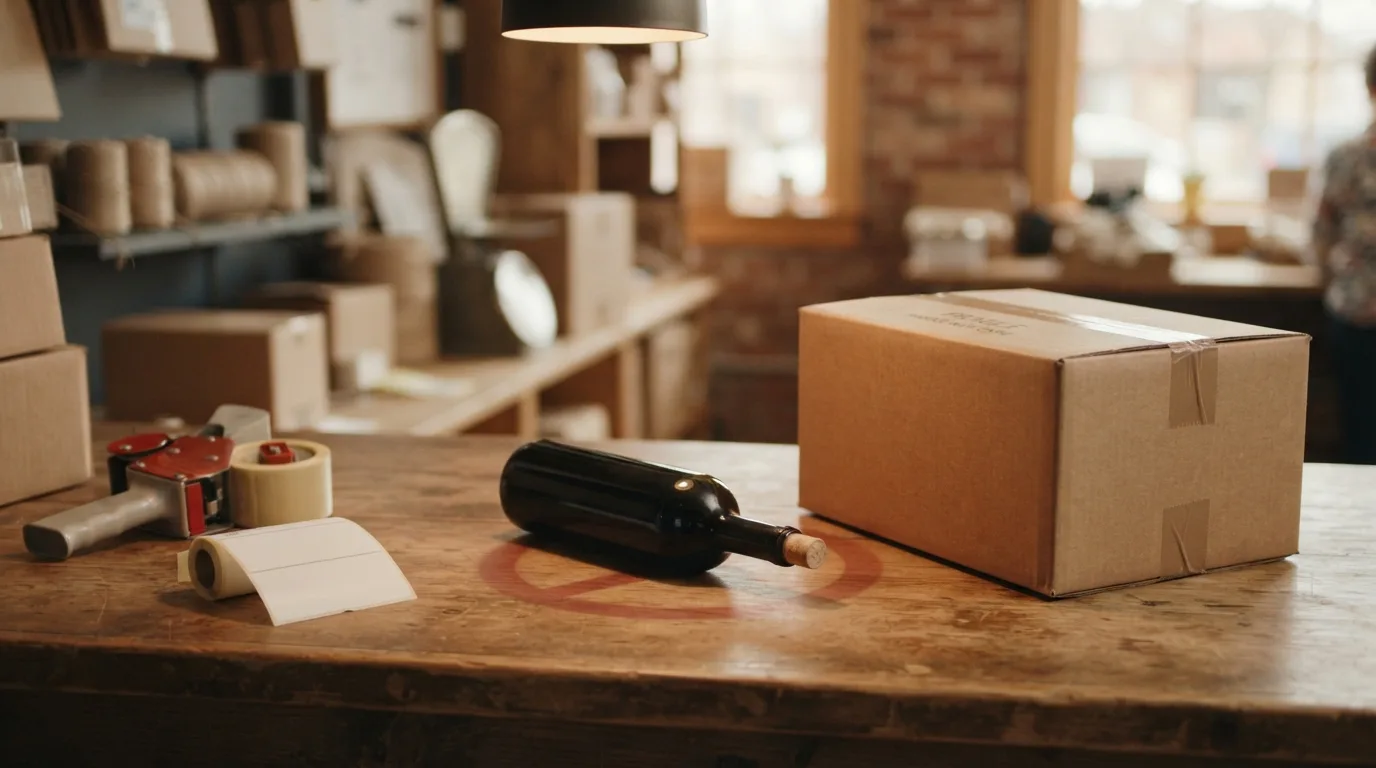
The tape gun squeaks. The bottle you padded with a dish towel — your cousin's wedding vintage, the one your brother can't buy out here — slides across the counter, and the clerk barely glances at it before shaking their head. "We can't ship alcohol." You stand there holding a box that suddenly weighs nothing, twenty minutes of packing gone. You try the next store. Then the post office. Same shake, three times, and the drive home is longer with the bottle warm in the back seat.
What you wanted was the ten-minute version: box it, hand it over, done. What you got was three refusals and no explanation.
Here's the part nobody at any of those counters tells you: the carriers aren't picking on you. Alcohol only moves through FedEx and UPS when a licensed business has signed up for the privilege, and federal law keeps consumer alcohol out of the mail — Publication 52 classifies beverages over 0.5% alcohol as nonmailable, and the narrow exceptions are licensed lanes consumers can't touch. That boundary decides everything else — why it exists, what a workaround really costs, and the legal route that actually gets a bottle to your brother. (The flip side of these rules — what happens when a legal wine delivery arrives and nobody's home — we cover in what to do when a wine delivery needs a signature.)
What's Really Behind The Counter Refusal
The clerk who shook their head wasn't making a judgment call — they were enforcing a wall built by three different systems.
USPS is a flat federal ban. Federal law — Title 18, Section 1716 of the U.S. Code — makes intoxicating liquor nonmailable, and USPS Publication 52 carries it through: beer, wine, liquor, nothing goes in the mail. The only carve-outs are official ones, like liquor moving between state agency employees for testing. No gift exception. No "it's just one bottle." USPS even tells mailers to strip the labels off a box before reusing it — a wine logo alone can get a package pulled off the line.
FedEx is a licensing gate, not a prohibition. FedEx ships plenty of alcohol — just not for you. Only shippers who hold the right state licenses, get approved by FedEx, and sign a FedEx Alcohol Shipping Agreement can put a bottle in their network. The lanes are narrow even for licensees: wine can flow from licensed winery to consumer, but beer and spirits only move between licensees. Every alcohol package needs an adult (21+) signature at delivery, and the label has to come out of FedEx's electronic shipping system — a handwritten airbill isn't allowed.
UPS runs the same play. Spirits, beer, and wine travel only under a signed UPS agreement for approved shippers who hand over their licenses and sit through a policy review. Spirits go licensee-to-licensee, and while UPS carries beer to consumers in approved states under its beer-shipper agreement, it does not accept packages containing spirits for delivery to a consumer.
So picture what's behind that shaking head: a carrier agreement that lets the carrier refuse, seize, or destroy a bad package, terminate the store's account, and drag a federal violation into it. The clerk isn't guessing at policy. The policy was written so nobody at the counter ever gets to say yes. (And if you're wondering whether the package could just "find its way" to the right carrier another way, see what happens to misplaced packages — misplaced drop-offs get returned or held, not quietly forwarded.)
The Tally You Never See
By now the workaround is forming in your head — everyone thinks of it. Wrap the bottle in a sweater. Write "olive oil" on the label. Hand it over with a straight face.
Walk through what happens when it's found. And it does get found — a box that sloshes, smells of cork, and weighs three pounds gets opened eventually. The carrier seizes it and can destroy it: your $40 bourbon gone, no claim, because declared-value insurance never covers prohibited contents. If it leaks and stains someone else's shipment, the name on the label eats that damage. And under all of it sits the fact that the package is now a misdeclared bottle in a federal system — the exact thing 18 U.S.C. § 1716 prohibits, the thing carriers are obligated to report.
The slower cost you pay in the car. A Saturday afternoon spent driving between two, three stores, hunting for a yes that was never for sale, then home with the same bottle and less gas. The refusals were never about your packing skills. Knowing the wall exists before you leave the driveway is the whole game.
Who the System Was Built For
You didn't get turned away because you did anything wrong. You got turned away because the rules were never drawn with you in them.
Alcohol shipping rules exist to protect the three-tier system: producers sell to distributors, distributors sell to retailers, retailers sell to you. Every bottle is supposed to pass through licensed hands so taxes get collected and dry counties stay dry. Direct-to-consumer shipping is a narrow licensed exception carved into that system — not a right you were waved away from.
In Ohio, that exception looks like this: a winery holding an S-1 or S-2 direct-shipper permit can ship wine to your door — up to 24 cases, or 288 bottles, per household per year, under Ohio Revised Code § 4303.232 and its companion sections. The winery pays Ohio taxes and reports shipments to the Division of Liquor Control each year. The delivery demands an adult signature. Beer has a narrow lane — an S-1 beer permit holder may ship beer to Ohio consumers — but spirits have no direct-to-consumer path in Ohio; they move between licensed businesses only. Ohio also keeps an on-paper cap on individuals hauling wine back across a state line themselves — 4.5 liters, six bottles, in any 30-day window — though that particular rule is being contested in federal court right now, so don't plan a side business around it.
That's the door the system left open. It just doesn't open from your side of the counter — it opens from the winery's.
What We See Every Day
We live on the receiving end of that licensed lane. A legal wine shipment from a permitted winery rolls in on a carrier truck needing an adult signature — at 2 PM on a Wednesday, when nobody you know is home.
A bottle that requires an adult signature can't be left on a porch. The driver rolls on, and by the second attempt the winery is charging a re-delivery fee or the case is riding back to California.
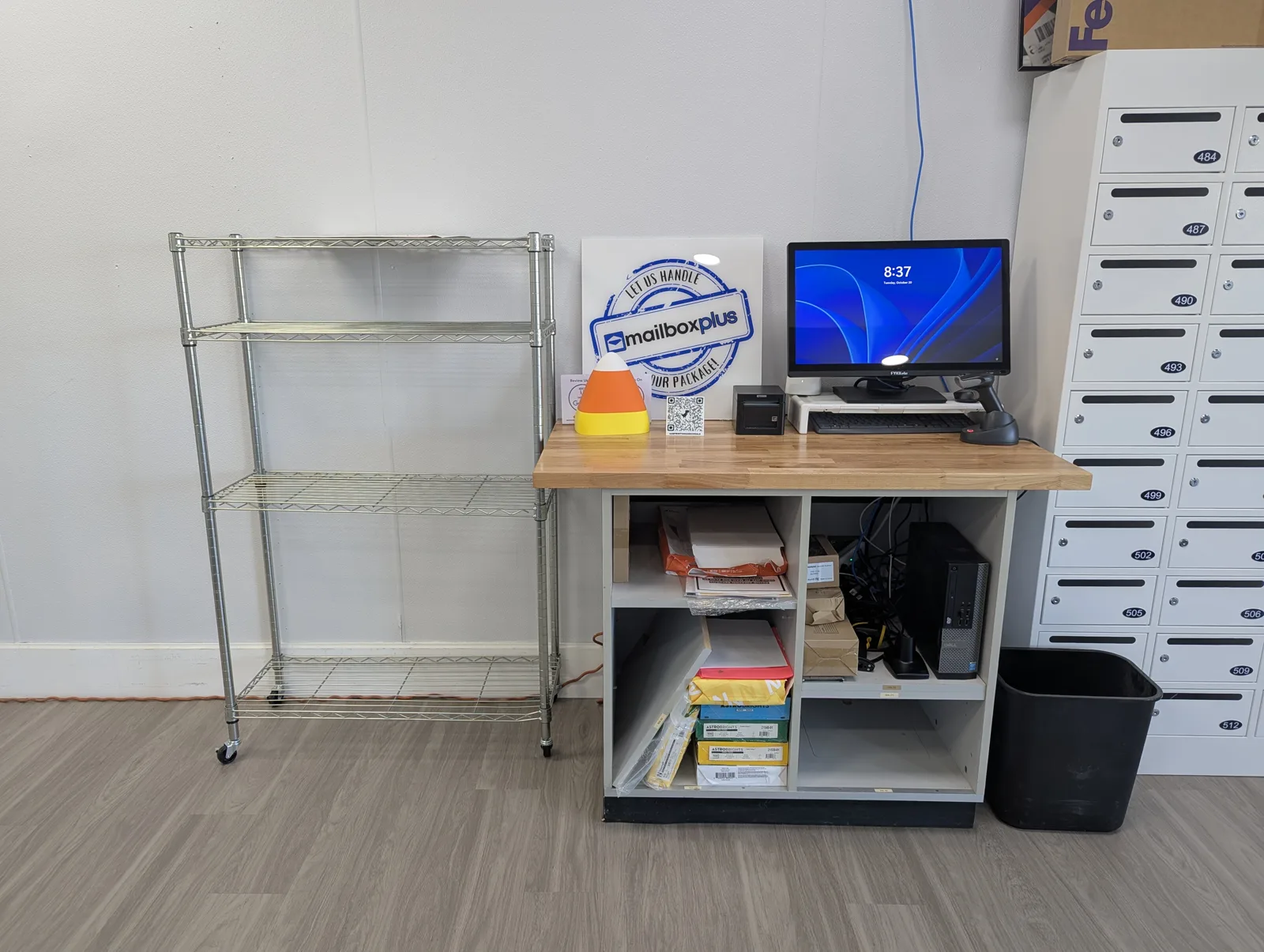
The counter and mailbox wall at Mailbox Plus in Concord Township, where signature-required shipments are received and held for pickup
That's the errand we absorb. The delivery lands at our counter in the Gristmill Village plaza — 7554 Fredle Drive, Concord Township, just off Crile Road — we sign for it, and it sits where we can see it until you pull in during counter hours. Wine clubs, vacation-timed orders, cases bound for a house where the only adults commute: we handle these situations every week.
And here's the half of the story most shipping stores won't say out loud: we can't take your bottle outbound either. Not won't — can't. The same agreements that keep our receiving side working forbid the other direction, and we're not putting your package or those carrier relationships on the line for a workaround that fails anyway. What we can take off your plate is everything after the order: the signature, the hold, the pickup on your schedule.
The Process, Measured
Here's your actual decision tree — measured against the rules, not against hope.
- Gift or personal bottle, one-off. No carrier path exists — USPS bans it, FedEx and UPS refuse consumers. Drive it yourself if the drive is doable, and if it crosses a state line into Ohio, stay under the on-paper 4.5-liter-per-30-days limit. A bottle in your trunk needs no paperwork. A bottle in a shipping box needs a license you can't get.
- Wine you want to buy and send to an Ohio address. Order from a winery holding an Ohio S-1 or S-2 direct-shipper permit. They create the label, the carrier requires the adult (21+) signature, and the household cap is 24 cases a year. That's the entire legal pipeline for a case of wine reaching a door.
- You run a licensed alcohol business. Then you're who the system was built for. Line up your state licenses, sign the carrier's alcohol agreement, ship through their electronic platform, apply the adult-signature service, and check destination-state rules on every order.
- The timing is the problem, not the law. If the licensed shipment is coming and nobody's home, route it to us. It gets signed for at our counter and held for pickup — the part of the pipeline you were never supposed to handle alone.
There is no option five. No clever label, no "olive oil" on the customs line, no sympathetic clerk three towns over. Every version of option five ends with less money and the same bottle.
Run the Numbers on Standing Still
Compare the math on the wrong choice against the right one.
Mislabeled shipment, discovered: the bottle is seized and destroyed, the $25-to-$60 freight is gone, and the account that shipped it eats a prohibited-item report. You paid to lose it.
Legal winery order: the winery charges its real shipping cost, taxes are handled on their end, and the case shows up needing one adult signature. Cost to you beyond the wine: a stop at a counter on your schedule instead of half a day waiting on a driver's.
Driving it yourself: gas money and the 4.5-liter cap. The cheapest legal option by far — right up until the recipient is a state away, which is exactly when the licensed-winery order earns its freight.
Zero Mental Overhead
Now flip the scene you started with. Your wine-club case is in transit and the tracking alert pings while you're sitting in a meeting. The old script fires — porch thieves, a doorstep baking in the sun, a hundred-mile round trip to a depot that closes before you get there.
The new script is boring, which is the point. The delivery is set to land at our counter. The driver gets the adult signature from us. On your way home you turn off Crile Road into Gristmill Village — the plaza next to Pub Frato, minutes off SR-44 and I-90 — park, and walk out with the case in one hand. No missed-delivery loop, no depot hours, no flinch every time the phone buzzes with a tracking update. All the mental weight of "when will it actually get here, and will someone be home" just evaporates, because somebody competent was standing where the signature was needed.
You hand us the tracking number. We hand you the case. Nothing to fight.
Test It With One Errand
You don't have to reorganize your life around this. Next time the urge hits to wrap a bottle in a sweater, stop — spend five minutes on the legal route instead: pull up the winery's shipping page, look for their Ohio direct-shipper permit, place the order, and set the delivery to our counter if nobody will be home.
And you don't need anything figured out when you come in. No appointment, no forms, no prepared questions. Bring the tracking number, or just tell us what's coming — we'll sign, we'll hold it, and we'll hand it to you at the counter, Monday through Friday 9 to 6, Saturday 9 to 2. The bottle in your back seat can stay there for the drive to your brother's — that one was always legal — and now the ones that need a signature won't be your problem anymore.