The Rule That Changes When Your Paperwork Is Due
If you order from overseas sellers, or you run a small shop that imports samples and inventory, you already know the drill: the package crosses the ocean fine, then sits in customs limbo while somebody somewhere files entry paperwork. Right now, the filing deadline for many low-value shipments is up to 15 days after arrival. A proposal from U.S. Customs and Border Protection would erase that cushion. Filings would be due when the shipment arrives — not two weeks later.
The proposal is not law yet. It was published in the Federal Register on Oct. 8, 2026, and the public comment window runs through Dec. 7. But if it takes effect as written, cheap imported packages — the entry types that cover millions of parcels a year — will move on a tighter clock, with more data required up front, and CBP's own analysis says shipping costs would likely go up. Here is the deadline squeeze, and how to stay ahead of it.
The Deadline Squeeze
Call the mechanism what it is: a paperwork deadline moving ahead of the goods. Two entry types are in CBP's crosshairs.
Entry type 11 is the informal entry process for shipments valued at $2,500 or less — the simplified lane most low-value commercial imports travel. Today, the entry filing can be submitted within 15 days of arrival. The proposal would require it upon or prior to arrival. CBP sampled entries between September and November 2025 and found that over half of entry type 11 imports would not have met that earlier deadline had it been active. Read that again: more than half of the current volume would have missed the new cutoff.
The proposal also adds a required data element — the final deliver-to party, if it differs from the consignee — so the seller ships to one name and the package lands at another. That is common for small businesses shipping to a receiving address, and it is exactly the kind of detail that stalls a parcel when nobody filed it.
Entry type 13 is the newer processing path for international mail shipments valued at $2,500 or less. It would demand a data set almost identical to entry type 11, plus two more fields: the shipper or sender, and the package tracking number. The carrier would have to put that tracking number on the inward manifest so CBP can verify the date of importation. And the clock is brutal: a postal entry would have 15 days to file before being deemed voluntarily abandoned. Today, USPS holds items for pickup for 30 days before they are abandoned or returned.
That is not a niche rule. It touches 52.4 million entry type 11 imports and 24.4 million postal entries in just nine months — Sept. 1, 2025, to May 31, 2026, by CBP's own count. When you tighten the rules on lanes carrying tens of millions of parcels, the friction shows up on doorsteps — including in Lake County.
Four Days of "Customs Status Updated"
You ordered a replacement part, or a batch of inventory, or a birthday gift from an overseas seller. The tracking said "Arrived in U.S. — Customs status updated" four days ago, and it has not moved since. You refresh the page while the coffee brews. You refresh it again at your desk. At 11:40 that night you refresh it one more time, and the screen gives you the same three words it gave you at breakfast. You email the seller, who is twelve time zones away, and start doing the math on whether you just lost your money. Under the proposal, the risk shifts: shippers who cannot gather and file the required data by arrival may delay the import on purpose, and CBP's own assessment of the effect on shipping times is, in the agency's word, "ambiguous." Meanwhile USPS estimates it would need up to $20 million in systems updates and up to eight months to build them — and anticipates needing warehouse capacity equal to 80 percent or more of postal import volume, because longer average holding periods would strain facilities that were designed for flow-through processing, without warehousing. More packages, held longer, in a system built to move them straight through. You can picture the shelf space problem from here.
For a small online seller, there is a second sting: CBP itself says the changes "would result in stricter duty collection for postal entries and higher shipping costs" for both entry types, likely reducing import volumes. Some of that cost lands in your landed-price math, and some of it lands in the checkout price your customer sees.
Why the Rules Should Not Cost You a Package
Here is the honest part: the goal behind the rule is legitimate. CBP wants more data, earlier, so it can target unlawful shipments more accurately, improve trade compliance, and bring postal imports into parity with everything else entering the country. Nobody serious argues against stopping dangerous or counterfeit goods.
The problem is the load distribution. The proposal asks importers — often individuals and tiny businesses, not customs brokers — to have complete, accurate entry data ready the moment a parcel lands. Miss the deadline and the consequences range from delays to a postal entry being deemed voluntarily abandoned at 15 days instead of the 30-day hold you may have assumed. A rule can be right on paper and still mean that a hobby seller's $40 reorder gets caught in machinery built for trade enforcement. You should not need to study Federal Register prose to receive a package you already paid for.
At the Fredle Drive Counter
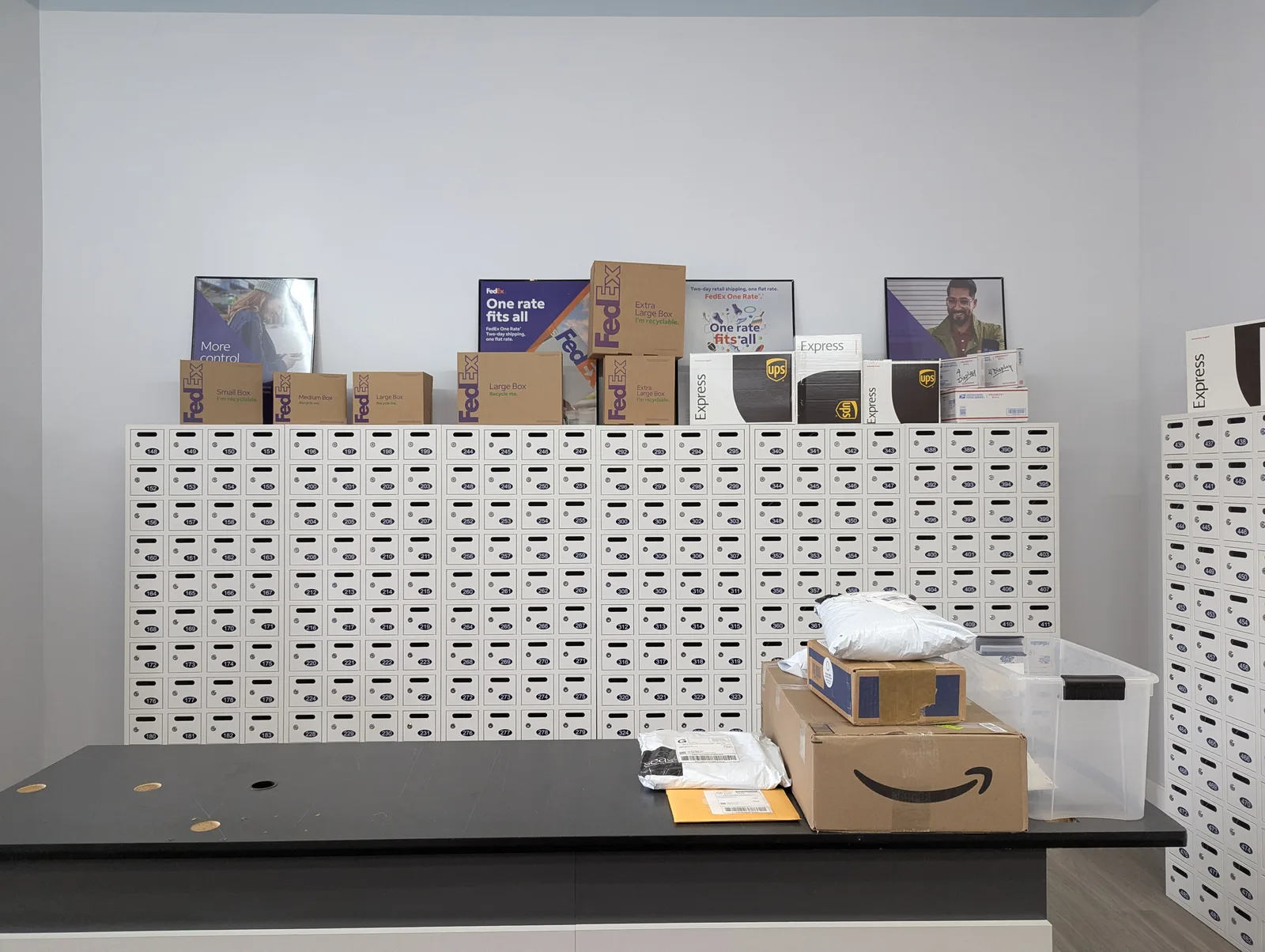
Shipping counter at Mailbox Plus in Concord Township with FedEx, UPS, and USPS shipments staged for pickup
We are an independent shipping store on Fredle Drive in Concord Township, and we sit downstream of exactly these systems. Every week, people walk up to our counter with an international tracking number that has gone quiet, a duty notice they do not understand, or a small-business shipment they are afraid to send because the customs paperwork looks like a tax audit.
We are not customs brokers, and we will not pretend to file entries for you — that is regulated work. What we do is the practical layer around it: we ship with all the major carriers, we help you prepare shipments with accurate contents descriptions and values so your paperwork starts clean instead of starting wrong, and we receive and hold packages at our address so an international order has a stable, staffed destination instead of a porch. When a rule like this one tightens the system, the sellers and shoppers who have their data straight and their delivery address settled are the ones whose packages keep moving.
How to Get Ahead of It
You do not need to become a trade-compliance expert. Three habits cover most of it.
- Know your entry lane. If you import commercially, find out whether your shipments move as entry type 11 or type 13, and what the $2,500 threshold means for your orders. Your carrier or broker can tell you which lane your parcels travel.
- Get your data right at the source. Accurate contents, honest declared values, a sender name, a tracking number, and a clear deliver-to address. Most customs pain we see at the counter traces back to a vague description or a value that did not match the invoice — things that were annoying before and will be disqualifying after a rule like this.
- Separate the shipping from the shopping. If you buy from overseas, have the option of receiving at a staffed location with a real street address — the same reason an online seller's private mailbox beats a porch — so a delivery does not depend on someone being home or a package waiting on a step for 30 days.
And one more: comment. The Federal Register docket is open through Dec. 7, 2026. If the 15-day abandonment window or the arrival-day filing deadline would hurt your business, saying so is how the record gets balanced.
What You Lose by Waiting
If the rule lands as proposed and you have done nothing, the costs stack quietly — the same way the fuel surcharges stacked onto invoices that never budgeted for them. Time: packages that used to clear in the background now sit while someone scrambles for data elements they did not know were required. Money: CBP's own projection of higher shipping costs and stricter duty collection on postal entries flows into every landed price you quote. And the worst cost is quiet: a postal entry that misses the 15-day filing window can be deemed voluntarily abandoned — your package, written off, because a deadline slipped. For a small seller, one lost reorder can cost more than a year of getting the paperwork right. Until then you pay in small installments: the tracking number you check while the coffee brews, again at your desk, again before bed.
Once the New Rules Are Just How Shipping Works
Picture the same international order six months from now. The seller filed the entry data before the parcel ever boarded the plane. Your tracking shows arrival, then customs, then out for delivery — no limbo, no scramble, because the data was ready when the deadline demanded it. The package lands at a staffed counter instead of your doorstep, you pick it up during our business hours, and you never once wonder whether it slipped into an abandonment window. The rules got tighter; your process did not, because it was already tight.
That is the whole trick, and it is smaller than it sounds. You cannot control what CBP publishes. You can control whether your sender name, tracking number, and deliver-to address are ready before the parcel lands.
Bring Us the Confusing Part
You do not need to have this figured out. Bring the confusing tracking number, the duty notice, or the shipment you are nervous about to our counter at 7554 Fredle Drive in Concord Township, and we will look at it with you — no appointment needed. If it is something we handle, we handle it. If it is something only a customs broker can do, we will tell you that straight, so you spend your money on the right help. The rules are changing around your packages. You should not have to decode them alone.
Source: CBP Proposed Rule, "Low-Value Shipments," 91 FR 64532 (Oct. 8, 2026)(opens in a new tab). Details summarized via Supply Chain Dive coverage published Oct. 14, 2026.