The Wrong Proof Can Cost You the Whole Case
You mailed the notice. You paid extra for a signature. You did everything the counter clerk at some big-box store told you to do. Then a judge, a clerk, or the other side's attorney looks at your paperwork and says the five words nobody wants to hear: "this doesn't meet the requirement."
It happens constantly, and it almost always comes down to the same confusion. Certified Mail with Return Receipt and a carrier "signature required" option look similar from the outside — both end with somebody signing for something. They are not the same evidence, they prove different things, and the statute or contract you are trying to satisfy usually names one of them specifically. Here is what each one actually delivers, what it costs this year, and how to choose before you spend money on proof that doesn't count.
The Systemic Problem: Two Different Records With the Same Name
The mechanism working against you is simple: carriers sell "signature" as a generic feature, and the language sounds interchangeable. "Signature required," "return receipt," "proof of delivery," "signature confirmation" — for most people these blur into one idea of someone signed, therefore I have proof.
But the records are built differently, and that difference is the whole game.
USPS Return Receipt (PS Form 3811) is a distinct extra service tied to the mailpiece. Per USPS, it gives you the recipient's signature plus the delivery address (if different), the delivery date, and the time of delivery. When you buy it with Certified Mail, all three records tie to the same mailpiece — but they don't all travel with it. You keep the stamped Certified Mail receipt the day you mail; the tracking record and, later, the signed green card or electronic return receipt document the delivery. Together they form one chain of custody split across two places: your copy in your file, the delivery record in the USPS system. When an Ohio statute says notice must go "by certified mail, return receipt requested" — which ORC 1923.04(opens in a new tab) names for the three-day notice before an eviction action — it is naming this exact record. (We broke down the certified-mail-vs-courier choice itself in USPS Certified Mail vs Courier.) A UPS driver's signature on a package cannot fill that slot, because the statute named a different instrument.
Carrier signature options are a different product solving a different problem. UPS Signature Required means the driver obtains a signature at delivery and will not leave the package unattended; Adult Signature Required goes further and verifies the signer is 21 or older with a photo ID. FedEx offers the same three-tier ladder. These options prove a package arrived and who took custody of it — genuinely valuable for a $2,000 item or age-restricted goods. What they do not do is carry the statutory weight of a certified-mail record, and they are attached to a package, not to a legal notice.
The trap springs when someone guesses. They ship a legal letter as an overnight package with Direct Signature Required, feel fully covered, and discover at the worst possible moment that the statute, court rule, or opposing counsel wanted certified mail specifically.
The Phone Call You Don't Want to Get
Picture the moment it surfaces. You are in a hearing, or on a call with a property manager's attorney, or standing in front of a county clerk's window. Someone slides your delivery record back across the desk and asks, "was this sent certified, return receipt requested?"
You had a signature. You have a tracking page that says Delivered. But the answer is no — and now the question isn't whether you mailed the notice, it's whether you can prove the kind of mailing the law asked for. Your stomach drops the same way it does when a check bounces: the money left, the job didn't get done, and you have to do the whole thing again while a deadline keeps running.
People who hand us a notice before a big mailing don't haggle over the fee. They stand there holding the paper a little too flat, then ask the same question in different words: "will this one hold up if it ends up in front of a judge?" That's what they're paying the $4.65 to stop worrying about.
Mailing a Notice Shouldn't Take a Law Degree
Nobody should need a law degree to mail a document correctly. The carriers know "signature" reads like universal proof, the packaging stores rarely ask what the proof is for, and the fees are all small enough that nobody comparison-shops them. So people guess, pay, and hope.
It also shouldn't cost a fortune to do it right. Certified Mail in 2026 is $5.55 plus postage — the green card adds $4.65, the electronic return receipt $2.91. That's roughly the price of a fast-food lunch to produce the one record most courts and agencies recognize. The real cost is not the fee. The real cost is the redo, and the redo is where deadlines die.
At the Fredle Drive Counter
We run the mail counter at Mailbox Plus at 7554 Fredle Drive in Concord Township, and certified and legal mailings come through regularly: eviction notices, demand letters, court filings, insurance correspondence, HOA violations, contract terminations.
Here is the honest posture a good counter takes: we are package experts, not your attorneys. We will not tell you what your lawsuit needs. We cannot give legal advice, and we won't pretend to. But a staffed counter can do one thing a self-serve kiosk cannot — ask what the proof is for. If you tell us the statute or court rule says "certified mail, return receipt requested," we fill out the exact form that matches the words. If you tell us you need an adult signature on a package, we ship it that way. What we refuse to do is let the words blur.
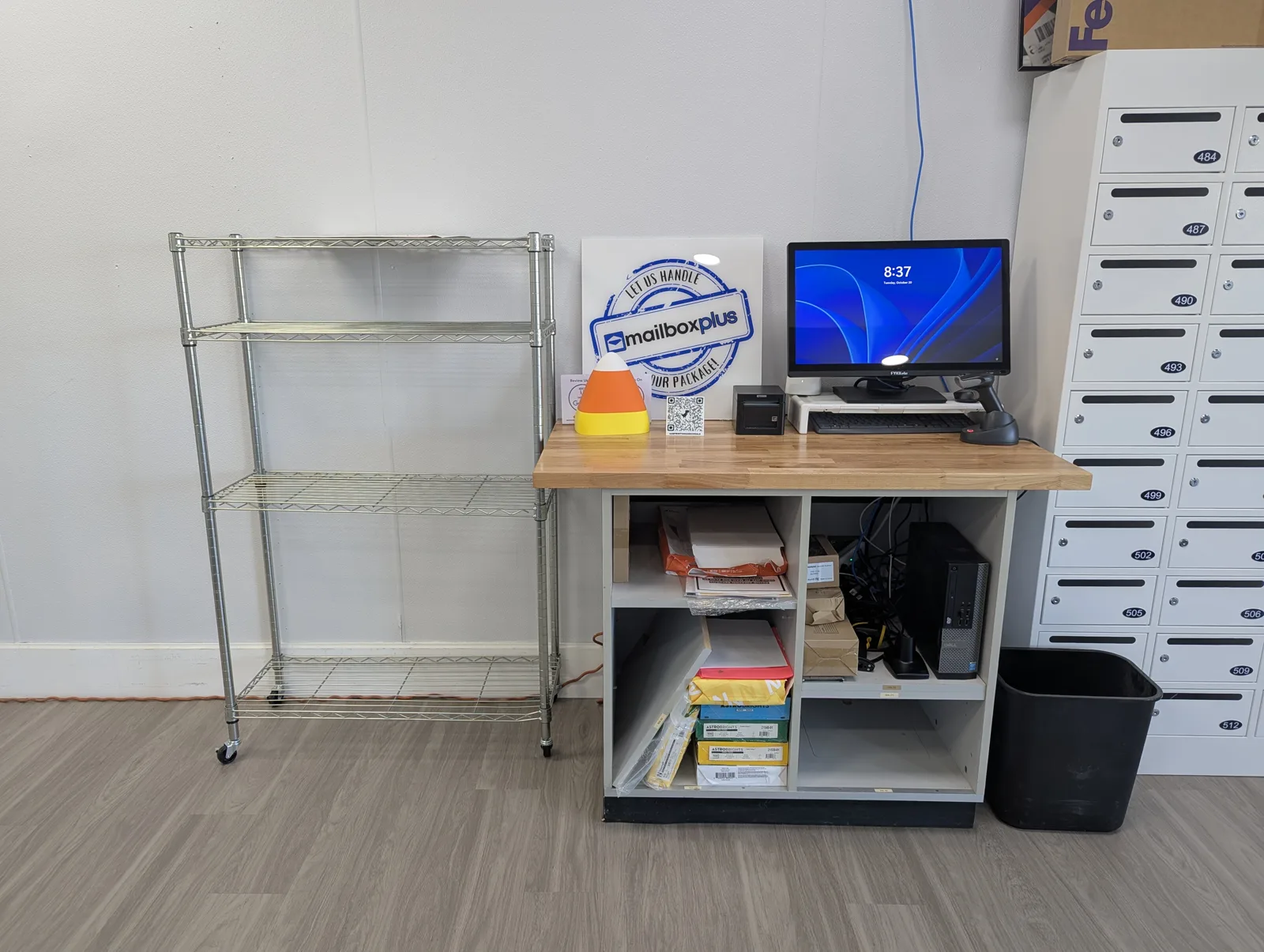
The counter and mailbox wall at Mailbox Plus in Concord Township, where certified mail and signature-required shipments are prepared.
Two things we check every time on a certified-mail piece:
- The address. Certified Mail records the delivery address. If your notice has an old address on it, the proof ties you to the wrong door.
- The receipt. You keep the Certified Mail receipt stamped by USPS the day you mail. That date plus the signed return receipt is the complete record. Lose the receipt and you've lost half your evidence.
The Comparison: Side by Side, No Straw Men
Both tools have real jobs. Here they are honestly.
|
USPS Certified Mail + Return Receipt |
Carrier Signature Required (UPS / FedEx) |
| What it proves |
Recipient's signature, delivery date, time, and delivery address on a USPS form (PS Form 3811) |
Someone at the address signed for the package on a date |
| 2026 cost |
$5.55 Certified Mail fee + $4.65 green card (or $2.91 electronic) + postage |
UPS: $4.75 Signature Required, $5.75 Adult. FedEx: $7.60 Indirect or Direct, $10 Adult |
| Speed |
Moves at the speed of the mail class it rides — typically 1–5 business days on First-Class Mail, not guaranteed |
Next-day to a few days depending on the service you pay for |
| Named by statutes |
Yes — ORC 1923.04 names "certified mail, return receipt requested" as one permitted method for Ohio eviction notices |
Rarely; statutes name certified mail, not courier signatures |
| Extra controls |
Restricted Delivery ($14.35) limits delivery to a specific person |
Adult Signature verifies age 21+ with photo ID |
| Best for |
Legal notices, filings, demand letters, anything with a statute behind it |
Packages: valuables, electronics, alcohol, anything you don't want left on a porch |
Say it plainly: if your document is a package, carrier signatures are the right tool — FedEx makes Direct Signature Required the default on any package with a declared value of $500 or more (you can swap it for its authenticated QR-code delivery if you prefer). If your document is a legal notice, certified mail with return receipt is very often the tool the rulebook names. When the deadline is short, some people send both — an overnight courier copy for speed and the certified original for the record. That costs more than either one alone; it costs less than arguing about service later. (We can't give legal advice on your specific case — the statute, court rule, or contract language is the authority. Bring it in and we'll match the mailing to the words.)
How It Works at Our Counter
- Bring the document and the requirement. Show us the statute, rule, or letter that names the proof. Don't have the citation? Tell us what it's for — eviction notice, court, insurance — and we'll flag what the words on your paper say.
- We prepare the forms. Certified Mail label, PS Form 3811 green card or electronic return receipt, Restricted Delivery if the rule calls for it. You don't fill anything out at a kiosk or guess at a checkbox.
- You leave with the stamped receipt. The date-stamped Certified Mail receipt is your half of the record. Tracking starts immediately; the signed return receipt follows after delivery.
What You Lose by Guessing
Time. A do-over mailing restarts a notice clock that was already running. In an eviction, a defective notice can push the filing out weeks.
Money. Fees are the smallest number in this story. Refiling fees, attorney time, a lost small-claim — the wrong $4.75 signature can set off a chain that costs hundreds.
The record itself. USPS will not sell you a return receipt after the fact — per USPS policy, return receipt must be purchased at the time of mailing. If you mailed without it, the best you can request is delivery-record information after the fact. The choice you make at the counter is the only chance you get to make it.
The Mailing You Won't Have to Redo
The next time you have a document that matters, the whole experience takes a few minutes: you pull into our lot on Fredle Drive, walk in with the paper and the requirement, and hand it across the counter. You tell us what the rule says. We build the right record — certified, receipted, addressed correctly. You walk out holding the stamped receipt, and the quiet part is what you feel: no second-guessing on the drive home, no late-night search for whether "signature required" counts. You'll know it counts, because you matched the words.
Hand Us the Requirement, Not a Finished Package
You don't need to know which form number your situation calls for, and you don't need the mailing prepped or sorted. Bring the document and whatever letter, rule, or contract is asking for proof — that's the whole assignment. If the document also needs a notarized signature first, we handle that at the same counter — see where to get documents notarized without an appointment. Our counter at 7554 Fredle Drive in Concord Township handles the forms, the fees, and the receipting, Monday through Friday 9:00 AM to 6:00 PM and Saturday 9:00 AM to 2:00 PM. Bring the requirement in plain English. We'll turn it into the right piece of mail.