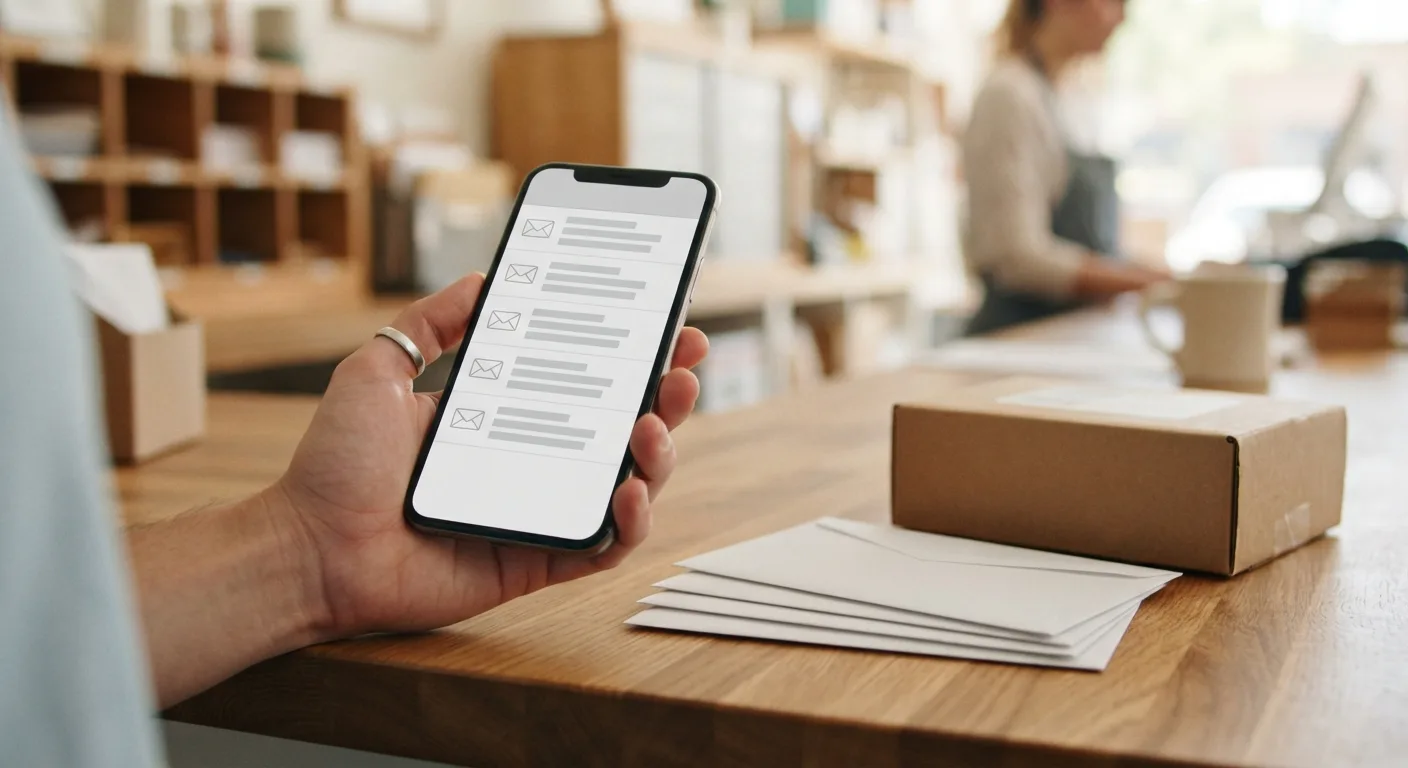
Where Your Afternoon Actually Goes
Somewhere on your kitchen counter right now there is a stack: a takeout menu, a flyer, and under both of them a white envelope you have not opened — possibly the jury summons, possibly the insurance notice, possibly nothing. You are twenty minutes away in your car, and there is no way to look. The envelope will still be sealed under the menu when you get home, and you will still not know what it is. If it is the one with the Friday deadline, the deadline does not wait for you to dig.
It should not work this way. Your mail should show up on the same screen as everything else, tell you what arrived, and wait for one instruction: read it, keep it, or get rid of it.
That envelope should already be a photo on your phone, with one instruction under it — open it, forward it, or shred it. A person at a real street address does the physical part. You do not drive. (If you are wondering how that differs from the PO Box in your head, start with what PMB means on an address — the designator is doing more work than it looks like.)
What's Really Behind The Mailpile Guessing Game
The mechanism is simple, and it is not your fault. The Postal Service delivers mail to a place, not to a person — a box, a slot, a porch — on the assumption that someone is standing near it when the carrier comes. Almost nobody is anymore. And the two official workarounds for that gap both charge you something.
First workaround: change your address when life moves. But a change-of-address order is a one-time instruction, not a standing system — senders update their lists on their own schedule, and some never update at all. The renewal notice goes to the old place anyway.
Second workaround: get a PO Box. That solves the front-door problem for Postal Service mail — and stops there, because a USPS Box cannot accept UPS, FedEx, DHL, or Amazon deliveries. That is not a store policy; it is how the system is built. The moment something ships by another carrier, the Box is a dead end and the package comes back to your porch, unattended, while you are at work.
So the system quietly hands you the bill: drive home to check, hold packages at an empty house, keep your home address printed on labels and public filings, and hope the envelope under the menu is not the one with the deadline. The customer pays the gap. The system does not.
Count the Minutes You Won't Get Back
Run the actual errand and watch what it costs. You take the 12:10, circle the old complex twice, leave the car half in a visitor spot, and thumb through a rubber-banded stack of somebody else's Valpak at the mailbox wall while your phone buzzes in your pocket. The notice is not in it. Twenty minutes each way, and you are back at your desk with nothing — the errand resets itself, because tomorrow brings more mail to the same dumb box.
The money version shows up later. The notice that went to the old address becomes a late fee. The filing that missed its window becomes a re-filing fee. The package left on the step becomes a claim, a deduction, a replacement order — a dollar amount attached to a box that no one signed for.
And the privacy version is the one that follows you: your home address on every shipping label, every invoice, every Secretary of State filing — a public record tied to your front door, searchable by anyone who buys from you, sues you, or just gets curious.
The Rule That Only Helps One Side
Here is the rule most people learn at the counter, mid-form. Before any private company can receive your mail on your behalf, USPS requires PS Form 1583 — one page, two forms of identification, one with a photo — and the address itself has to carry the "PMB" or "#" designation under the Domestic Mail Manual. The form exists so your mail is never handed to an unaccountable stranger.
If that sentence made you picture the counter — the folder you grabbed, the second ID you are suddenly not sure qualifies, the person behind you waiting with their paperwork neat and ready while you ask the clerk "does a voter registration card count?" — you have already met the rule the way most people do: holding the wrong piece of paper, apologizing to someone whose job is not to judge you, and feeling like you cannot handle your own mail. The form manufactures that moment. It does not have to.
Now watch how the same rule that protects you also fences you. A PO Box needs no such paperwork for a reason: the Postal Service keeps its own mail in its own buildings, and everything else stays outside. The form-required street address is the one that takes packages from every carrier — but you have to go through the form, the IDs, the notarization, to get it. The better address is behind a one-page wall most people have never heard of.
The rule protects you. It just doesn't advertise itself. So people who never learn it keep paying for the gap: porch theft, missed notices, a home address on a label for a stranger to look up.
How We're Built Differently
The app you sign up through is a national platform — but your mail does not live in the app. Your mail lives in a bin at this counter, at 7554 Fredle Drive in Concord Township, behind a door a real person opens every morning, six days a week — 9 to 6 Monday through Friday, until 2 on Saturday. When the scan is blurry, when UPS leaves something that belongs to your neighbor, when you need an envelope opened and its contents read back to you, you are not opening a ticket. You are talking to the staff who physically have your envelope in a drawer a few feet away.
We receive it from every carrier, because a real street address — not a Box number — is the one kind of address UPS and FedEx can deliver to. We log it, scan the outside of the envelope, and the platform pushes it to your phone. Then you decide: open and scan the contents, forward it, hold it for pickup, or shred it. One tap. We do the physical part.
And the form that looked like a wall in the last section? It is the easiest one you will file all year — you bring two IDs and we stand at the counter with you while it gets done. That is the whole gap between "the system" and the person at the counter: the rule stops being something you have to figure out alone.
The Three Steps to Transfer the Task
- Pick the address and file the form. Choose a plan, get your street address plus your private mailbox number, and complete USPS Form 1583 — one page, two forms of ID (one photo). You can sign it at our counter or notarize it remotely; the platform walks you through it.
- Point your mail at it. File a change of address with USPS and update the senders who matter — bank, insurer, DMV, state filings. From then on, everything lands at the store, where it is signed for and held.
- Run your mail like email. When new mail arrives, you get a notification, see the outside of every envelope in the app, and tap an instruction. The mail waits — safely, indoors, behind a counter — until you say otherwise.
No scanning homework. No email triage. No drive to "check if it came." If you have already compared national services, the honest side-by-side is in virtual mailbox vs. a real local mailbox — the short version is the app is the same; the counter is not.
The Three Costs of Staying Put
The spreadsheet costs you have already seen: the late fee from the notice that went to the old address, the re-filing fee for the window that closed, the claim on the porch package no one signed for, and a home address sitting on public filings, searchable by anyone with a browser. Add the real fix against them — digital mailbox plans start around $9.99 a month, less than one re-filed form.
But the cost that actually keeps people from fixing this is the counter moment. The wrong second ID. The apology. The quiet certainty that everyone watching has concluded you cannot manage your own mail. So people postpone the form, the postponement becomes years, and the mailbox keeps winning. That is the whole trick: the paperwork that would end the errands feels like a test you might fail, so the errands keep running.
Here is the other half of it, from our side of the counter: nobody fails it. You bring the two IDs, we read the form with you line by line, and if an ID does not qualify, the clerk tells you which one does and you come back with it — no judgment, because this is our everyday paperwork and your once-in-a-lifetime paperwork. The moment that read as a test is, from the other side of the counter, just Tuesday. Done once, properly, it never comes back — not at this counter, and not at any other.
What Changes on the Calendar
The next trip you take, there is no mail checklist before you leave. The next legal notice arrives on your phone while you are in line at the grocery store — cart half full — and you read it there, at 11:40, because a carrier handed it to a person at a counter and that person signed for it. The next customer order ships to a street address that holds the package, and your home address stays where it belongs: off the label, out of the filing, off the internet.
And the days you do drive in are quick because the work already happened: the store sits just off Crile Road, minutes from SR-44 and I-90, with the mail sorted, the packages logged, your stack sitting in one place with your name on it. You were never required to come at all — that is the part that takes getting used to. The errand you have been running your whole adult life simply stops existing.
Start With One Trip
You do not need your mailing life figured out before you walk in. You do not need to know which senders to update, whether your IDs will pass, or how the app works. Bring the two IDs and the questions — working out the rest of it is literally what the counter is for.
Come see us at 7554 Fredle Drive, Concord Township, Ohio — or call 440-709-1946 and we will walk you through setting up your digital mailbox from wherever you are. Bring the mess. We will hold the mail; you hold the phone.
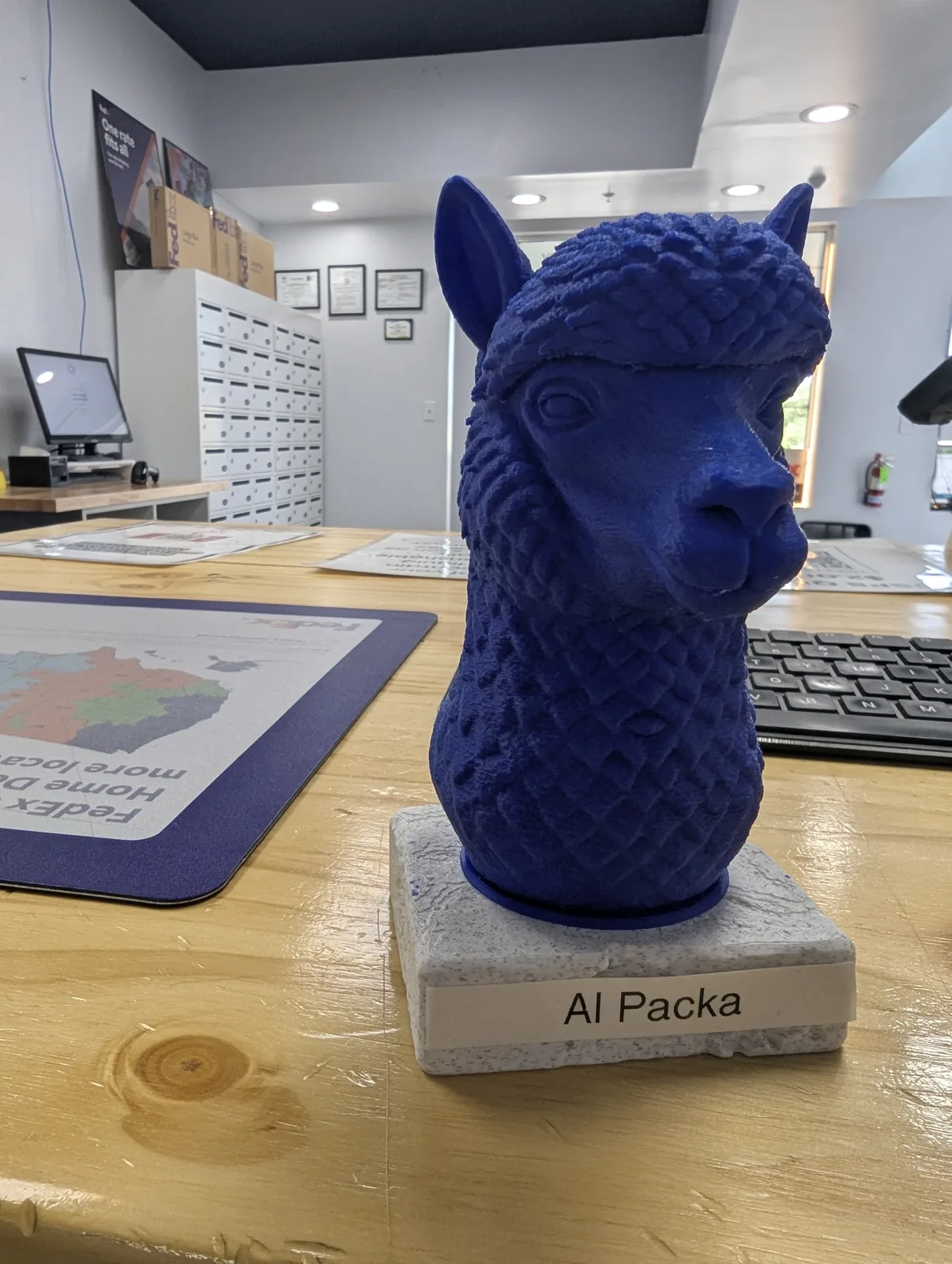
The counter at Mailbox Plus in Concord Township, Ohio — the mailbox wall and copy center window where your postal mail gets sorted and scanned for your digital mailbox.