What You Learn After the Tenth Trip
You shipped something that mattered. You stood at the counter, you answered the question — "any value to declare?" — and you said yes, because the item was worth more than a tank of gas. You paid the fee, you got your receipt, and you believed the hard part was done.
Then the box arrived crushed. And you learned the thing nobody tells you at the moment you hand over your money: paying for declared value buys you a chance to file a claim. It does not buy you a payout. The claim itself is a separate fight, with its own paperwork, its own inspection, and a list of ways to lose that has nothing to do with whether the carrier actually broke your item.
Here's what should happen instead: you declare the value, you pack the box to the standard the claim process will actually enforce, and if the worst happens, the paperwork is already in order. That's how we handle it at our counter in Concord Township — declared value recorded on the spot, packing done to the standard the carrier's own investigators will judge it against. This article walks through what declared value really is, what it costs, and the specific reasons claims get denied so yours doesn't.
The Burden-of-Proof Switch: How It Got This Way
Start with the number everybody runs into. Under UPS's terms and conditions of service, if you declare no value — or declare more but don't pay the charge — the carrier's maximum liability for loss or damage is $100 per package. That is the default liability cap: whether your box holds a $90 coffee maker or a $4,000 watch, declaring no value puts a hundred-dollar ceiling on what the carrier owes you.
Declared value is the mechanism for raising that cap. Per UPS's published value-added pricing, there is no charge up to $100 of value. Above that, the retail charge is $0.90 for each $100 of declared value — any fraction of $100 counts as a full $100 — with a $2.70 minimum. Declaring a $500 package costs about $3.60 more than the base rate. Declaring a $2,000 package costs about $17.10. The ceiling is $50,000 per package on domestic services, with one brutal exception: packages containing jewelry are capped at $500, period.
Now the part that surprises people. Declared value is not technically insurance — it's a change to the carrier's liability. But read the ground-transportation terms closely and the wall between the two blurs: UPS states that excess valuation charges are remitted to an insurance company as shipper's interest insurance, and that claims are filed with and settled by UPS on behalf of that insurer. So the money you pay for "declared value" ends up as an insurance premium anyway. The label changes; the claim process does not.
And here is the switch that flips without warning. The moment a claim exists, the burden of proof sits on you, the shipper. UPS's own claims documentation says every claim requires supporting documentation — an invoice to establish value, photos during a damage claim, and possibly a physical inspection at a UPS-approved location. Firms that process carrier claims for a living report the same denial reason over and over, year after year: insufficient packaging. If the carrier's investigator decides the box didn't meet its packing guidelines, the claim can be denied even when the declared-value fee was paid in full.
So the same transaction that looks like protection at the counter contains a second, invisible contract: pack to the standard or the coverage you paid for can evaporate. Nobody hands you that contract. You find out about it while reading a denial email.
What the Regulars Already Know
It's 7:40 on a Tuesday morning and the denial email is open on your phone. You're standing in the kitchen, the tracking number still copied to your clipboard, the crushed box still on the table because nobody told you to keep it. And you're doing math you never agreed to — the item's real value minus the $100 default, minus the shipping, minus the time already spent photographing, uploading, and waiting.
Ask around any shipping counter and you'll hear the same story with different amounts in it. The seller who shipped a laptop in last year's box and lost the whole value because the box was "previously used." The grandmother whose package was inspected and denied because the contents had been thrown out — nobody told her family to keep every piece of packing material until the claim closed. The small-business owner who declared $3,000 on a shipment, paid every fee, and still lost, because the cushioning was judged inadequate for the weight.
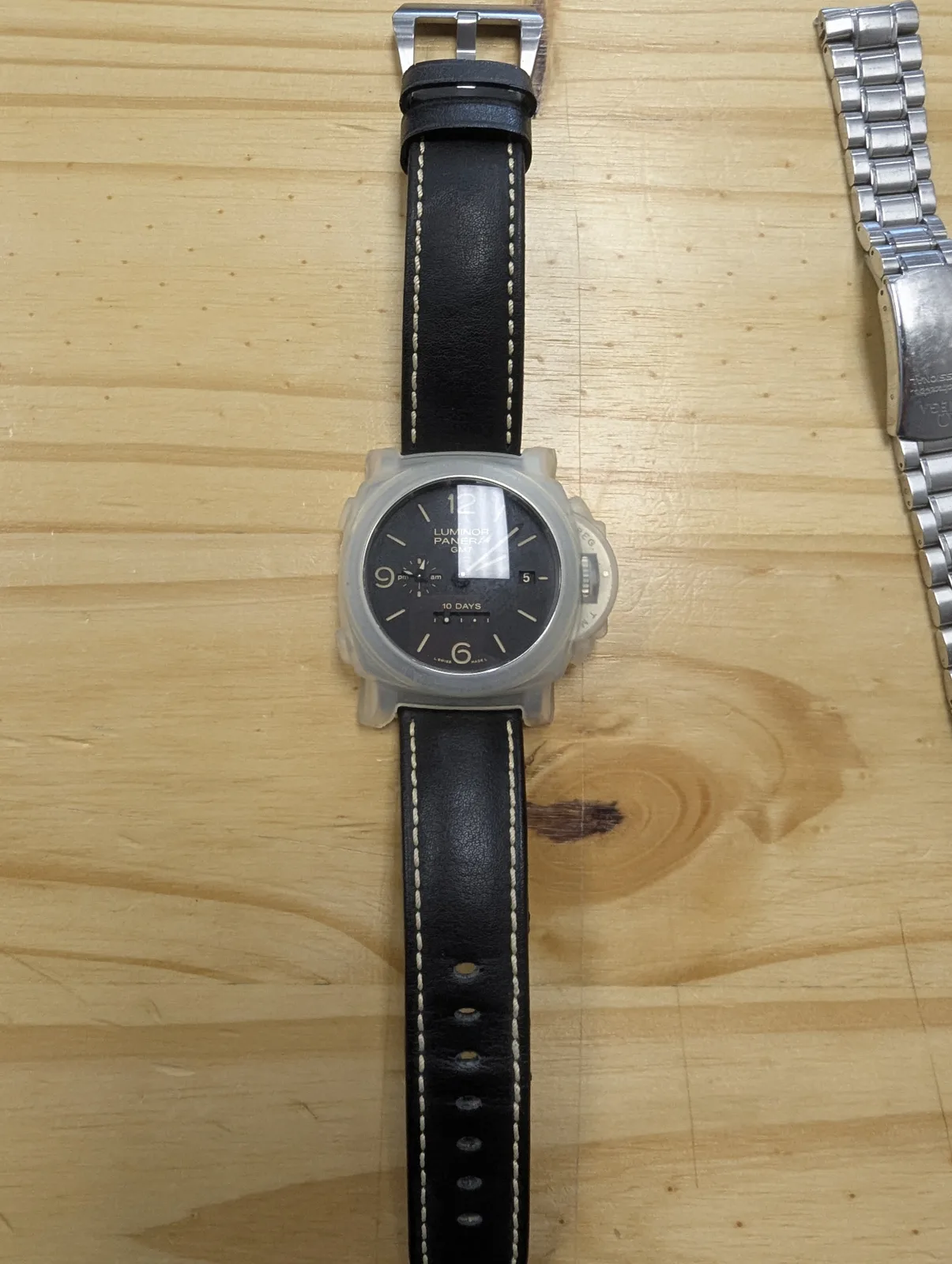
A high-value wristwatch being prepared for secure shipment on the packing counter at Mailbox Plus in Concord Township, OH.
If you ship valuables often, two of our other guides go deeper on this same trap: how to ship jewelry safely covers the packing standard a jewelry claim will be judged against, and why a USPS box can't take a FedEx or UPS label covers the packaging rules carriers enforce before a shipment even moves.
The pattern is always the same: the fee was paid, the claim was filed, and the loss still landed on the person least equipped to absorb it. That's not bad luck. That's the system working exactly as written — you just never got to read the writing.
Why This Quietly Stopped Making Sense
None of this means declared value is a scam. A $4,000 instrument travels at $100 of protection by default, and that gap is real — declared value exists to close it, and the price is reasonable. USPS plays a parallel game: Ground Advantage, Priority Mail, and Priority Mail Express each include up to $100 of insurance in the postage price, with additional coverage purchasable up to $5,000.
The problem is the gap between what customers think they're buying and what the terms deliver. You think you bought an outcome — "if it breaks, I get my money." What you actually bought is a seat at a claims process where the outcome depends on evidence you may not have thought to keep: the original invoice, photos before unpacking, the box, the cushioning, every scrap of it, retained until the claim concludes. Claims-help firms report the same failure over and over: all packaging material must be kept until the claim is resolved, and a package whose evidence was thrown out can get the claim denied.
A protection product whose protection depends on homework the buyer was never told to do isn't protection. It's a bet the buyer didn't know they placed. That's what should bother you — not the fee, but the fine print doing the deciding.
Inside a Store That Isn't a Franchise
At our counter on Fredle Drive in Concord Township, we're an independent shipping store — not owned by any carrier, which means we're not selling you one carrier's valuation product because the logo on the door says we have to. We ship UPS, FedEx, and USPS, and we ask the same question on every package: what's in it, and what is it actually worth?
When the answer is "more than the default $100," we talk about protection honestly — including third-party declared-value coverage through Marsh, an established insurer, with coverage available up to $50,000 per package when the packing meets the policy's standard. That last clause is the part the big carriers' kiosks never say out loud. Coverage is only as strong as the box it rides in, so we don't treat packing and declared value as two separate products. They're one decision.
And when a claim does happen, you're not navigating a 1-800 maze alone with a tracking number and a prayer. You come back to the counter where the shipment was recorded, and there's a human on your side of it.
Behind the Counter: The Real Process
1. Bring the item and, if you have it, the receipt or invoice. No pre-sorting, no forms filled out at home. The invoice matters more than people realize — it's the proof-of-value document the claims process will ask for first if anything ever goes wrong. Don't have one? Tell us; there are other ways to document value, and it's better to discuss them before shipping than during a claim.
2. Tell us what it's worth and let us pack it to standard. We record the declared value on the spot, and the box gets packed to the guidelines the carrier's investigators will apply — box strength matched to weight, cushioning matched to fragility, sealing done properly. This is the step that quietly decides claims before they're ever filed. A $4,000 item in a grocery-store box is not a $4,000 shipment no matter what the receipt says.
3. Walk out with documentation, not just a receipt. You leave knowing what was declared, what it cost, and exactly what to do — keep everything — if the package arrives damaged. If a claim is ever needed, the box, the contents, and all packaging stay intact until the claim closes, and you start at a counter where the shipment's history already exists.
What Nobody Tells You You're Paying
In lost claims. Every denial that turns on packaging is a full loss of the item's value over the $100 default — often hundreds or thousands of dollars, gone over a carton choice that took seconds. That is the most expensive packing shortcut in retail.
In discarded evidence. The receiver who sensibly throws away a crushed box and its foam peanuts has just deleted the claim's central evidence. Carriers can require the item and packaging for inspection; if they're gone, the claim usually dies with them. Nobody warns the person holding the box.
In missed windows. UPS's terms deem claims waived if not made within nine months of delivery — but practically, damage claims run on much tighter rhythms, since photos and inspection need to happen while the evidence is fresh. Waiting weeks to "see if it works out" is a decision, and it's usually the wrong one.
In the quiet tax of dreading it. You refresh the tracking page at lunch, then again before bed, doing the math on what the $100 default would actually cover if the screen says delivered but the box arrives crushed. That low-grade mental recalculating follows every shipment of anything valuable — and it never prints an invoice.
The Errand That Stops Being an Errand
The version of this errand that works looks unremarkable. You walk in with the item — packed, unpacked, whatever state it's in. You say what it is and what it's worth. The counter staff pack it properly, record the declared value, and hand you a receipt that means what you think it means. Total elapsed time: minutes.
And the difference you carry out isn't on the receipt. It's the silence in your head between "I shipped it" and "I'll know it arrived fine" — no background hum of what-if, no mental rehearsal of a claims website. You paid for coverage, and you know — specifically, in writing — what that coverage requires of you. The what-if goes quiet, and for once it stays behind at the counter.
You Don't Have to Figure It Out First
You do not need to know the difference between declared value and insurance, or which carrier's valuation terms changed last quarter, or how to photograph a damaged box like a forensic examiner. That's our homework, not yours — it's literally why the counter exists.
Bring the item as-is — no pre-taping, no forms, no apology. Tell us what it's worth, and we'll handle the rest: the packing to standard, the value declaration, the documentation that makes a claim survivable if one is ever needed. If the item is heading somewhere with real value attached — a watch, an instrument, a laptop, inventory — bring the invoice if you have it, but don't cancel the trip if you don't.
The counter at Mailbox Plus in Concord Township is where the box stops being your problem and starts being ours. Come see how easy that handoff is.